Showing posts with label Kapampangan food. Show all posts

Saturday, July 15, 2017

54. 15 OLD-TIME CONFECTIONS, BAKED GOODIES & OTHER KAPAMPANGAN TREATS

Pampanga has long enjoyed a reputation as “the culinary capital of the Philippines”.  Its chief agricultural products—sugar and rice—have enabled its excellent cooks to create exquisite delicacies in their kusinas—from simple kakanins to mouth-watering pastries and confections bearing elegant French or Spanish names. Here is a list of such goodies—often available at the local panaderia and pasalubong centers, or exclusively made only for the most special occasions.
**********

BUÑUELOS
Buñuelos—crisp, fried bread--are favorite snack treats often dunked in hot Spanish chocolate.  They are the local equivalent of the French beignet. In old Sulipan, in Apalit, it is  said that making and preparing buñuelos is  a test of skill for wives-to-be, as it involves molding, slapping, beating and folding  the flour dough to achieve the characteristic crispy layers of the bread.

GALANG-GALANG
These are slim, doughnut shaped cookies that look like bracelets, strung together when sold. In the days of yore, they were favorite giveaways during confirmation of Kapampangan kids, who often wore them, before enjoying them.

MASA PODRIDA
Filipino version of shortbread biscuits – excellent with coffee or tea. The circular cookie literally means “rotten dough”, but the taste is anything but that. The cookie is a rich-tasting with a crisp, crumbly texture made from butter, flour and sugar. The old bakery of Aurelio Diyco or “Apung Diung” in Plaza Burgos, Guagua, Pampanga (founded in 1880) popularized the masa podrida in Pampanga; they are perfect for eating with a steaming cup of robust kape barako.

PANARA.
Similar to an empanada, this half moon shaped pastry is filled with mung bean sprouts and shrimp, or sometimes grated green papaya.  The pastry is made with rice flour instead of regular wheat flour.  Pabalat lumpia (lumpia wrapper) makes a good substitute. The crunchy panara is dipped in vinegar then enjoyed bite by bite.

PATCU
You will never eat another puto bumbong again after you try patcu, an original Kapampangan delicacy that comes out only during the Christmas season (the word patcu is a corruption of 'pascu,' Christmas). Only two towns in Pampanga still make them: Sta. Rita and Guagua. The Guagua variety is a roll made of ground malagkit (glutinous) rice wrapped around a hefty filling of ngungut (grated coconut), plus a secret ingredient. A solitary store in Guagua still sells it, located along the Guagua-Sta. Rita road in Brgy. San Roque

PILIPIT
Pilipit—“ing biskwit a mamagasakit”—is so named because it is twisted like a rope. It is a hard, crunchy pastry, deep-fried until brown, then sugar-coated. Pilipit are still found being sold by smalltown bakeries all over Pampanga.

PULBORON.
Molded milk powder sweets, made from toasted unrefined corn flour, butter, sugar, a pinch of salt. Sometimes, other ingredients like pinipig, coffee, casuy nuts are thrown in.  They are traditionally wrapped in Japanese paper with fringed ends, but today, they are wrapped in cellophane. The most popular commercial brand today are the pulboron made by Sasmuan Delicacies.

PUSIT
Made with regular bread dough, this panaderia favorite is made interesting because of its twisty-curly shape that resembles the body of squid, hence the name. It's roughly the local equivalent of the bowtie donut.  It is slathered with Star margarine and sprinkled with sugar. The old Bondoc Bakery in Mabalacat still makes them.

PUTUNG BABI
Pan de sal  (local bread) halves are spread with mashed potato laced with sauteed ground pork meat (like pork torta), then swabbed with egg batter and fried—hence,  putung babi (pork bread).  A poor man’s version make use of mashed kamote flavored with bagoong (baguk) as filling. It is said that “putung babi” was a creative way to recycle old bread and is still a common merienda fare in many towns like Guagua, Sta. Rita, Mabalacat and Angeles.

SAMANI.
The samani used to be a favorite table centerpiece during fiestas and banquets. This attractive and amazing confection is made from roasted peanuts, that are coated with caramelized sugar made from muscovado. The coated peanuts are then arranged to form a flower basket, using the sticky syrup as to hold and bind the nuts together, until dry. The vanishing art of making samani is practiced only in Arayat town.

SANICULAS
Named after San Nicolas de Tolentino, saniculas cookies were introduced by Augustinian friars to Pampanga during the colonial times. The biscuit is made from arrowroot flour, and is imprinted with the image of the saint using specially-made wooden molds. Legend has it that San Nicolas, known as the healing saint,  revived the sick with blessed bread mixed with water, hence the "panecillos de San Nicolas", or simply 'saniculas' in Pampanga. Mexico. The saniculas made by culinary historian, Lillian Borromeo of Mexico, are consistent bestsellers with her patrons.

SANS RIVAL
Sans Rival – this is a very popular dessert found all across the country but is said to have its roots in Pampanga, particularly San Fernando. This is a Filipino take on the French daquiose, with generous layers of buttercream icing sprinkled with chopped cashew nuts interspersing with sheets of meringue. The entire concoction is smothered with the same buttercream and sprinkled generously with more nuts.

TOCINO DEL CIELO.
Mini-leche flan cups or tocino del cielo are typical desserts adapted from southern Spain.  Like leche flan, it is made from egg yolks and caramel, and cooked by steaming. In Barrio San Jose, Concepcion, Tarlac,  “tocino” is a kind of kalame (rice cake), made of galapong (ground rice), gata (coconut milk), similar to the tocino del cielo of Minalin.

TURRONES DE CASUY
“Turrones de casoy” are an age-old delicacy in Pampanga—crisp, crunchy nougats made from cashew, real butter, honey and egg whites wrapped in edible paper-thin “oblea” or wafer wafer. A Catholic nun from the Dominican order taught Felisa Lansang of Sta. Rita the original recipe for making this Spain-inspired delicacy in 1920. Her expertise in making this sweet treat resulted in a homegrown “turrones de casoy” (plus sans rival) business, the Ocampo-Lansang Delicacies, that has become famous in the Kapampangan region.

URARO COOKIES.
Small, flower shaped cookies, a specialty of Guagua. They are made from arrowroot starch extracted from several thick stems and roots  (rhizomes) of the arrowroot (Marantaceae) family of flowering plants. The result is a sweet, powdery-textured hard cookie that crumbles and melts in the mouth. Because of their small shapes and generally white color,  they are also called sampagita cookies. The uraros of La Moderna Bakery in Guagua are among Pampanga's bestselling take-home goodies.

PHOTO SOURCES:
Galang-galang, Masa Podrida: Mrs. Galang’s Kitchen, yutube series
Masa Podrida:
Panara: Fernando Santos FB page
Patcu: Robby Tantingco’s FB page
Polvoron: Emma Mary Tiglao FB page
Putung Babi; Cecile Yumul FB page
Samani: Singsing Magazine
Saniculas: Alex Castro photo
Sans Rival: my Lola Nor’s Meryendahan FB page
Tocino del Cielo; Ivan Henares FB page

Sunday, May 28, 2017

48. 14 NATIONALLY-FAMOUS KAPAMPANGAN FOOD BUSINESSES


ALING LUCING “The Sisig Queen”
The woman who, in 1974,  gave her name to her modest Angeles restaurant and catapulted “sisig” to national prominence was born Lucia “Lucing” Lagman in Tarlac. A good cook, Lucing experimented with innovating “sisig”, a favorite Kapampangan dish made from chopped parts of a pig’s ears, liver, chopped onions, calamansi, vinegar and spices and served on a sizzling platter. Her Aling Lucing’s Sisig earned a multitude of patrons from even outside the city, that soon attracted national media attention. Dubbed as the “Sisig Queen”, Aling Lucing’s food business helped establish Angeles as the “Sisig Capital of the Philippines”. Her business had not even reached its maximum potential when Aling Lucing was found bludgeoned to death on 16 April 2008. Husband Victorino Cunanan, reputed to be a gambler, was tagged as a suspect. At present, there are Aling Lucing’s Sisig restaurants run by relatives in Pampanga, plus branches in Makati, Pasig and Aklan—all serving different sisig versions. From an appetizer, the Kapampangan sisig had graduated to being staple feature for many landmark occasions.


CABALEN Restaurant
Back in the 1970s,  Maritel O. Nievera used to help run the family food business called “Bahay Pasalubong” in San Matias, Santo Tomas, Pampanga. It achieved a measure of success , so she and her sister Beth, were encouraged to open a small kiosk at SM City North EDSA  in 1986 selling various Kapampangan delicacies. Five years later, the Pinatubo eruption occurred. Holding fast to her faith in the future of her embattled province, she initiated a drive to make San Fernando a showcase of successful recovery  by putting up “Ituro Mo, Iluto Mo”, a restaurant  that promises every guest a classy Kapampangan dining experience. It proved to be a hit. She then went further by establishing Cabalen, the first Kapampangan specialty restaurant chain in Manila, captivating discriminating food lovers with authentic native cooking and signature dishes from the province. Through her fine restaurants, Nievera continues to promote widescale interest for Pampanga’s culinary arts, while showcasing the Kapampangan woman in her best light. Today, the “Queen of Filipino Buffet” , with her Cabalen Group, is on its 30th year of bringing the best of Pampanga’s cuisine to the Philippines.


EVERYBODY’S CAFÉ
Everybody’s Café and its ubiquitous diner-inspired sign has become a San Fernando landmark, and a favorite stop for many travelers passing by the city along MacArthur Highway. The idea to open a roadside café was conceived by couple Benito M. Santos and Carmen Nogoy during the 40s. A friend suggested a neutral name that’s neither pro-American nor pro-Japanese--”Everybody’s Café”. The Santoses started with 10 tables in a a space along the newly opened Consunji St. with a menu that included merienda items like pancit luglug and 30 centavo mami soup. By the 1950s, it gained a reputation as a favorite eating place of Diosdado Macapagal before going to his miting de avance. In 1967, a second Everybody’s Café building was put up and through the years, the list of customers expanded—from Pampanga High and Assumption students to Dña. Aurora Aquino, Pres. Cory Aquino and her children, Pres. Gloria Macapagal-Arroyo an showbiz celebrities. Everybody’s Café is known for introducing to a nation such special Kapampangan treats as “adobung kamaru” (mole crickets) a perennial bestseller of the house, betute (stuffed frogs), taba ng talangka, paku salad, morcon (Kris Aquino’s favorite), lumpiang papaya, tsokolateng binatirul and leche flan made of gatas damulag (carabao’s milk). Currently, Everybody's Cafe is operated by the Santos daughter, Mrs. Petronila Jorolan with the help of children Pocholo, Pamela, Kristine and Ma. Carmina. It has been true to its name through its long years of existence—it is indeed, a place for everybody!


HIZON’S CAKES AND PASTRIES
 Hizon’s Cakes & Pastries on Bocobo Street in Ermita, Manila was founded by Inocencia Hizon, a widowed single mother who worked as a department store clerk at Aguinaldo’s, Escolta. The Hizons have roots in Mexico. Family lore has it that the now-famous ensaymada recipe was given to her by an anonymous woman. Inocencia baked dozens of ensaymadas using the recipe, and engaged the help of her sister to peddle the pastries in offices, which, to her surprise, were all sold-out. This encouraged her to put up a bakeshop which she named simply as “Hizon’s”, on Raon St. Today, Hizon’s has branches in Pasay, Greenhills and Makati, run by daughter Milagros Ramos Roasa. The shop, regarded as an institution, (it was the late Dolphy's favorite hang-out place),  is also famous for its taisans, apple pies and ube cakes, but the ensaymada remains a sentimental favorite.


HIZON CATERING
The country’s leading off-premise caterer specializing in weddings, private parties and corporate events was started in 1987 by Baby Hizon, a Kapampangan from Concepcion, Tarlac. She parlayed her interest in culinary arts into an successful enterprise that began as a backyard business –catering to relatives and friends.  She was soon being sought after to cater birthdays, weddings, debuts and other special occasions.  After three decades, Baby’s , Hizon’s Catering has served over 14,543 weddings, 5,673 corporate clients, and 3,653 private events with its nearly three decades of experience. With son Joseph as current general manager, and assisted by eldest son, David, an American-trained chef, Hizon’s Catering has grown into a modern operations housed in a fully equipped 2,500-square meter commissary in Quezon City. Plans for the future include growing the business by about 15-20 percent a year, tapping the corporate and children’s events segment,  while maintaining its hold on the wedding catering market.


LJC RESTAURANTS
Larry J. Cruz, the son of renaissance man, writer and artist Emilio Aguilar Cruz of Magalang, is the founder of LJC Chain of Restaurants, beginning with Café Adriatico—a small café in Malate, that was put up in 1979. Cruz, a journalist, virtually had no experience in running restaurants, but his little café made waves—what with its good food, efficient service and a vintage ambiance that appealed to artists, celebrities, politicos, celebrities and people from the corporate world. Café Adriatico inspired the openings of cafes around the country. Today, despite Larry’s passing in 2008, the LJC Restaurants have expanded to include the management and operations of food outlets  like Abe, Abe Farm, Fely J’s Kitchen, Lorenzo’s Way, Café Havana, Larry’s Café and Bar and Polka Dot Bakeshop.


MANGAN
Cabalen paved the way for the establishments of other Kapampangan restaurants. San Fernando born and bred Ricco Ocampo, owner of several  lifestyle stores (“Sari-Sari”), diversified into the food business and opened “Mangan”, an authentic Kapampangan culture restaurant , to complement his earlier  “Kitchen”, both in Manila malls. Every dish should only be cooked upon order,” says Ocampo, “Cooking everything in the morning and reheating them during lunch and dinner betrays the essence of real Kapampangan cooking. Mangan, an all-day, casual restaurant, also serves merienda items such as puto bumbong, bibingka and halo-halo, Guagua style, with lots of leche flan, sweet bananas and macapuno. Complementing his Mangan Restaurant is Ebun, Kusinang Pinoy, at Greenbelt in Makati.


MEKENI FOOD CORP.
What started as a home-based chicharon and tocino business for couple Felix M. Garcia and Medica L. Santos is now—after 3 decades—a highly successful, giant processed meat enterprise called Mekeni Food Corporation. At the start, the promising meat business gave the Garcia couple supplemental income to send their five boys to school. Luckily, the boys found various employments abroad after college. But when the 1991 Pinatubo eruption wrought damage to their business, the Garcia sons came home to help their parents rebuild the business.  With the help of 30 employees, Mekeni was fully restored with greater success. Not only did the company bounced back from the calamity, but it also gave employment opportunities to a community of people who lost much in the aftermath of the eruption. Its flagship brands include the Mekeni line of cured tocino, tapa and longganisa produced in its world-class plant in Balubad, Porac. It also produces the popular Picnic premium brand of hotdogs and a host of other treats like Spicy Pork Barbecue, Corned Beef, Nuggets, Beef Teriyaki,  Kikiam and Squid Balls. Recently, Mekeni Food Corp. celebrated  “30 Years of Uplifting Filipino Lives”.


PAMPANGA’S BEST
Pampanga’s Best is the most well-known meat processing corporation that has been giving the Philippines and the world a taste of our renowned tocino, longganisa, tapa, bacon, hotdogs, embotido, barbecue, burger patties, nuggets, and more, for over 4 decades now. It was founded by Mrs. Lolita O. Hizon of San Fernando, who helped her neighbor—a meat dealer-- in preserving her leftover meats.  Mrs. Hizon cured the meat by improving and refining on the traditional process of fermenting Kapampangan “pindang” that is endowed with a delectable salty-sweet taste. The result is her famous  “tocino” products that would form the core of ber Pampanga’s Best business, now a multi-million peso venture personally run by her family, including her 12 children. “Always the best—from Pampanga’s Best”, so goes the company motto, a promise that the Hizons vowed to keep in response to the loyal patronage their meat brands enjoy to this day.


RAZON’S
The famous Razon's chain of halo-halo shops began as a small "refreshment parlor" at the Razon home in a Guagua subdivision. It was put up in 1972 by the Razon siblings: Virginia, Severina, Elena and Roger, and catered mostly to residents and local students. But the merienda items—particularly the pancit and the delectably smooth Razon’s halo-halo soon became the talk-of-the-town. Tourists began flocking to the Razon’s Guagua home, moreso when foodie writer Doreen Fernandez discovered it and wrote about “the best halo-halo in the world”. Surprisingly, Razon’s halo-halo only had 3 ingredients—sweet macapuno, sagin na saba, and leche flan. With the death of the siblings, the business flourished,  through several incarnations of the Razon’s refreshment shop ran by relatives.  One niece, Luz Razon-Cabrera operates 3 Razon’s stores. Her sister-in-law in San Fernando owns Teresita’s, which, according to the proprietor, makes halo-halo from the only original recipe approved by Virginia Razon. The first Razon’s of Guagua, owned by Razon Food Corp., opened on 8 July 2003 at the Food Court of Robinson’s Galleria. This chain has over 66 branches in Manila, as of 15 April 2016.


RED RIBBON BAKE SHOP
Amalia Hizon of Mexico, together with husband Renato Mercado, put up a little cake shop called Red Ribbon that drew praises for its cakes and pastries. They set up their first shop in 1978 along Timog Ave. in Quezon City. In a matter of years, the cake shop gained a substantial following, and in 1984, it opened a U.S. outlet.  The bakeshop was popular for its chocolate cake, blueberry cheesecake, black forest cake, ensaymada, empanada and mamon. It was no wonder then that Jollibee Food Corp. acquired the business in 2005. One of the fastest-growing bakeshop chain in the country, Red Ribbon has over 370 outlets all over the Philippines and some 33 stores in US with locations in California, Nevada, Washington, Hawaii, New York, New Jersey and Virginia.


 SUSIE’S CUISINE
Susie’s Cuisine has become a household name in Pampanga, a favorite go-to place for the most delicious Filipino kakanins or native delicacies like bibingkang nasi (rice cake), tibuk-tibuk (maja blanca), kalame, aleyang ube, sapin-sapin and moche. Began in the 1970s as a carinderia by Mrs. Anicia Ayson, she named her stall after her adopted daughter  Jesusa “Susie Ayson-Yabut, an Amerasian abandoned by her father. In time, Mrs. Ayson started adding native kakanins and pasalubong items to her offering, due to consumer demand. Her bestseller turned out to be her “tibuk-tibuk”, a creamy, delicate pudding made from pure carabao’s milk. Eventually, Susie Ayson-Yabut took over the business, which suffered a setback when Pinatubo erupted in 1991. Yabut and husband Glenn moved to Manila, and after earning enough capital, they returned to Angeles to re-open Susie’s Cuisine, with an expanded menu, and additional local treats like saniculas, araro, polvoron, turrones de casuy, brownies, okoy and bobotu. To date, there are about 15 Susie’s Cuisine branches in Central Luzon, raking in up to P5 million during its peak months.


LAPID’S CHICHARON & BARBECUE
D’Original R. Lapid’s Chicharon & Barbecue is rputed to be the largest producer of chicharon in the country today. It was started way back in 1974 as a “kainan” (eatery) by Rey Lapid, then age 23, a transplanted Kapampangan, whose father Frederico Sr. owned a meat stall in Quinta Market. He observed that his father’s customers would ask that the skin be removed; his dad would just often discard the skin away.Thus, Lapid collected the skin and ventured into chicharon-making. He perfected a recipe and began selling his chicharon in a Quiapo stall. Slowly, but surely, Lapid’s business grew, especially when he introduced cooking chicharon in front of customers in giant malls like SM, Robinson’s and Landmark. It is also the first chicharon manufacturer to use imported pork skin raw materials from U.S.A., Europe, Canada, and Korea. Indeed, chicharon has become synonymous to Lapid's, and this cracklin' delicious snack is enjoyed all over the country, thanks to the over 100 branches of R. Lapid's Chicharon and Barbecue in operations today!


CINDY’S BAKESHOP & RESTAURANT
Cindys—the place to be—was founded in 1971 by a group of businessmen in Tarlac who simply envisioned a restaurant that served “good food in a good place”. Thus was born the first Cindys store in Tarlac, that served a standard fare of baked breads, and merienda favorites. The successful reception to the store prompted  them to open more branches and to offer new menu items like burgers, French fries and express meals. But it was the bakeshop that gave Cindys a competitive edge. At its peak, Cindys was promoted through national advertising, a no mean feat for a homegrown business. To focus on its uniqueness,  Cindys re-conceptualized its product in 1996, by opening a store that was first a bakery, and secondarily a restaurant. This gave it an edge above the rising number of fast food joints. Today, Cindys has over forty stores nationwide.

SOURCES:
EVERYBODY’S CAFÉ: Kasalesayan ning San Fernando
HIZON’S: “Piece of Cake: Kapampangans’ Sweet Tooth”, http://viewsfromthepampang.blogspot.com/2015/04/381-piece-of-cake-kapampangans-sweet.html
HIZON’S CATERING: http://hizonscatering.com/
LJC GROUP OF RESTAURANTS: http://ljcrestaurants.com.ph/ljc/about/
SUSIE’S CUISINE, Meet Pampanga's 'kakanin queen' : http://news.abs-cbn.com/business/06/07/14/meet-pampangas-kakanin-queen
MANGAN: “Mangan is authentic ‘mekeni’ dining”.By Alex Y. Vergara
Inquirer News Service
MEKENI FOOD CORP.: http://www.mekeni.com/
PAMPANGA’S BEST: https://www.pampangasbest.com/

Friday, December 30, 2016

31. FRANCIS MUSNI’S TOP 10 POPULAR FOODS THAT KAPAMPANGANS OFTEN SERVE FOR CHRISTMAS

LORD FRANCIS MUSNI  is not only a connoisseur of good Kapampangan food, but is also a self-trained culinary wiz . When not busy with his work at the Municipal Trial Court in Cities at San Fernando, Francis spends time in his newly customized, old-world style kitchen in his Bacolor home, whipping up classic Kapampangan dishes for family and friends. He hopes to open his “kusina” to visitors soon.  Francis also does consultancy work for the Center for Kapampangan Studies, and is an instructor and museum curator of Don Honorio Ventura Technological State University. He has appeared many times on local and national media as a resource person on various aspects of Kapampangan culture, especially our culinary arts. Currently, he is one of the hosts of “Umpukang Kapampangan” over RW 95.1 FM, a program dedicated to spreading Pampanga’s cultural heritage and its arts. Meanwhile, he shares with us his list of some of the most popular foods that are a part of every Kapampangan’s holiday table every year.


* * * * * *
1. LIGANG PASCU. A soup that is a complete meal in itself. An otherwise regular daily fare becomes a traditional Christmas special when prepared with long, simmered ham bone, beef, pork and chicken with potatoes, cabbage, saguin saba, labanus, pechay, Baguio beans, white onions, and whole pepper corns with generous slices  of sang  (onion leeks). It is a staple on noche buena and media noche that cuts across social classes; it is a great social equalizer. Every Kapampangan home, palatial or humble, has it.


2. ALE. Jam prepared at Christmas time could be gandus (white yam), copis (red monggo bean), bule (kidney beans) and the ubiquitous and color-of-the-season ubi (purple yam). The tedious process begins with harvesting, boiling, mashing and cooking the jam into a rich well-done (malaniad, manangnang).consistency with aid of a trusty heirloom kawa in makeshift earth stove dug from the ground. The best ale should keep for at least 3 days.

3. SUMAN TILI/SUMAN PASCU. This is a delicacy of steamed sticky (lacatan ) rice wrapped in young banana leaves. It used to be available only at Christmas time in the pre-commercial kakanin era. You had to make it, hire someone to do it, or specially order it from someone (by asking to share in her expenses in doing her own and a little extra). It used to be given out as an aguinaldo to family and friends who went "manyiklod" on  Christmas and New Year's Day. Outside of Christmas,  they call them suman tili becuase one had to roll them (tili) like fat cigars. Be careful in buying your lacatan lest it be samutan and you end up with a half  or unevenly cooked (magadtu) suman.

4. CALAME. This is a generic Kapampangan term for rice delicacies shaped in the form of a cake. Calame making in this busy days is a tradition on the verge of extinction. The long and arduous process of making it has discouraged many and has given birth to an industry. Calame can have several names depending on the main ingredient and the place where it comes from. It could be simply calame nasi (literally, rice cake) or it could be calame duman, ubi, culubasa (which is also called bico), patulbad and pituclup (in Sasmuan). Warning: calame, beer and firecrackers are a bad combination.

5. HAMUN. Traditionally, Kapampangans got.their hamun from the.local Chinese store. It was either Hoc Siu, King Sue.or Marca Pato. The best ham was hamon de funda (whole leg ham bone-in and neatly tied in net stocking). The burgeoning sugar industry of the rich sugar planters and landlords preferred imported Virginia ham. Now local ham is produced and is supplied by several popular homegrown meat processing industries. The Kapampangan is likely to expect ham as a Christmas gift from his boss or trading suki. Employees proudly display their hams on the way home from their last day of work or after their Christmas party. As one popular ham brand puts it, the ham is the "star of the noche buena"

6. SUCLATING BATIRUL. Kapampangans will only go for the Chocolate "e". Richly prepared from a ground paste of well roasted cacao and mani ground with a gilingan batu, boiled in a pohia or batidor with gatas damulag added in and frothed rich and creamy with a molinillo, the suclating batirul is to die for. Albeit, the southerners (Ilonggo and Cebuanos) think it is adulterated, the Kapampangan wants his chocolate with peanuts still. The chocolate goes well with duman, suman or a magapuc (brittle) cookie like sanicolas, mamon tostado (sopas) or masa podrida.

7. BARBEQUE. An American vestige that refuses to leave the Kapampangan, each household prides itself with its own homemade pibabaran (marinade). The barbeque is served as one of the viands, a pulutan and a "pipali-pali" the day after.

8. FRUIT SALAD. Another American influence that celebrates the PX tradition of the Kapanpangans. One preferred Ligo as the best brand by far unlike other cheaper commercial Philippine syndicated.brands, which consists mainly of pineapples, papaya and pineapples. Kapampangans stock up on cans.of fruit.cocktail, whipped cream and condense milk as early as October, as grocery shelves go empty by early December.

9. BIBINGCA and PUTU BUMBUNG. Very popular post-Simbang Bengi treats,

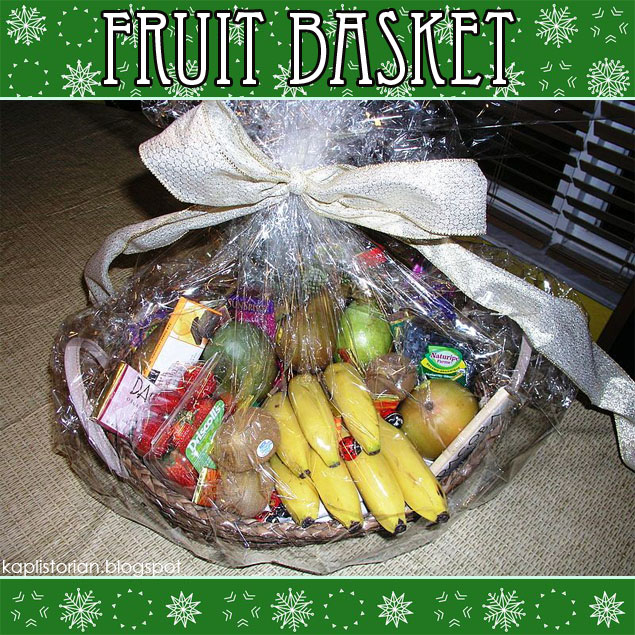
10. A BASKET OF IMPORTED  FRUITS.  Not normally purchased on ordinary days,

PHOTO SOURCES:
LIGANG PASCU: Adda Morena Canlas Musni FB page
ALE: Betty Ann Besa-Quirino, http://www.asianinamericamag.com/
SUMAN TILI: Ruston Banal FB page
CALAME: Reyjay Manago FB page
HAMUN: Robby Tantingco FB page
SUCLATING BATIRUL: Insights Magazine, http://chocolatedebatirol.com/
BARBEQUE: Ralf Laurence Bonifacio FB page
FRUIT SALAD: Guagua Pampanga Kabalenan FB page, 
FRUIT BASKET: https://commons.wikimedia.org/wiki/File:Wrapped_fruit_basket.jpg
BIBINGCA/ PUTU BUMBUNG: Ivan Henares twitter photo

Friday, December 23, 2016

30. BETTY ANN BESA-QUIRINO’S LIST OF 18 FAVORITE KAPAMPANGAN SWEETS AND DISHES FOR THE HOLIDAYS.

A KAPLISTORIAN EXCLUSIVE! Award-winning foodie writer, Betty Ann Besa-Quirino shares with us her list of must-serve Kapampangan holiday fare. She writes: "Pampanga is a neighbor to my home province, Tarlac so a lot of the Christmas treats we enjoyed in my childhood were inspired by our neighboring Kapampangan friends and family. It is a fact, that every Pampango host ends every meal with a great dessert – these Petit Fortunes, a classic example. These gastronomic tiny treats were regular fixtures of our holidays."

PETITE FORTUNE. Tiny, bite-sized sweet pastries made of casuy nuts (cashew) eggs and butter.

BIBINGKANG NASI. Sticky rice cake made from malagkit rice, with sweet coconut cream topping. An all-time favorite kakanin!

HALEYANG UBI. For my “ube haleya” (ube jam). I buy fresh purple yams at the Asian markets when they’re in season the last months of the year from October to December. The tuber is peeled, boiled, then mashed, mixed and cooked with milk, sugar and butter. Some recipes call for mixing it with coconut cream or grated coconut meat. In all these ways ube is utterly delectable.

BOBOTU, or TAMALES. Our version of the Mexican tamales makes use of a seasoned mixture of rice flour, coconut milk, fish sauce and annatto oil. A large dollop of the tamales mixture is topped with slivers of chicken, slices of boiled egg, ground peanuts, wrapped in banana leaves then cooked in a steamer.

BIBINGKANG CAMOTENG DUTUNG. Good old fashioned cassava cake. Made with grated cassava, milk, coconut milk and cream, sugar and eggs.

PUTUNG LASUNG. The ubiquitous putong puti are steamed rice cakes that can be found in almost any pasalubong center in Pampanga. The original putung lasung makes use of ground glutinous rice, and are a perfect match with sopas, tidtad and any kind of pancit.


SUMAN INANGIT. A quick-fix kakanin simply made from from malagkit rice and coconut milk, flavored with salt. The mixture is cooked and stirred until almost dry over low heat, and covered with banana leaves to give it a nice aroma. Portions of the cooked mixture are then wrapped in banana leaves to become suman inangit!

CAPAMPANGAN ENSAIMADAS. The Capampangan Ensaimada prides itself in using NO LESS than 24 and up to 36 egg yolks. Anything less would be a major offense.

TAISAN DE PAMPANGA
A classic sponge cake loaf,  similar to mammon, but heavily buttered on top, then sprinkled with sugar, and sometimes with fine grated cheese. So-called because the slim, rectangular load often wrapped in cellophane, is shaped like a whetstone—a “taisan”.

TOCINO DEL CIELO. Small, cup-shaped Spanish flans, purely made from egg yolks, water and sugar. The creamy caramel desserts are a specialty of my late mother-n-law Remedios Pineda Quirino, who was from Sta. Rita, Pampanga

BICO CULUBASA. Sticky rice combined with squash, which gives this kakanin its trademark  light brown color.

CHICKEN GALANTINA. Chicken Galantina is a stuffed, deboned chicken dish popular during the holidays. It takes patience and time to concoct this dish, as it involves the laborious preparation of the stuffing (made from ground meat, sausage, hard-boiled eggs, spices, pickle relish, raisin, carrots,etc.), as well as the long steaming process. But the flavorful results is certain worth the wait.

KALAME DUMAN.  Duman, a fragrant green rice variety,  is only in season during Christmas, so it is prized by many Kapampangans, who often store duman in their refrigerators, to be taken out for making their special “kalame duman”, or for dunking  into a steaming hot cup of tsokolateng binatirul, until the grains bloat.

KALDERETANG KAMBING– Goat stew, a favorite entrée of my late dad; the spicier the better.

BANCA-BANCA. Boat-shaped pastry tarts in cellophane wrappers,  are always a welcome treat, some topped with whole cashew nuts, or swirls of merengue.

HALEYANG GATAS DAMULAG. Pure carabao’s milk with added sugar is cooked over low heat while stirring, until its water evaporates, and milk assumes a jam-like consistency. Favorite as pan de sal filling, or eaten by the spoonfuls as pastillas jam.

SANICULAS. Panecillos de San Nicolas, or simply saniculas, are crumbly, arrow-root based cookies that features an imprinted the saint owing to a wooden mold specially used to make these treats. Designs of heirloom molds are unique to a specific family descriptive of what their profession was. For example,  the longer, oval shaped molds belonged to the Lansang family, who dabbled in music, thus the harp carvings.

DULCE PRENDA. These pastries use the same batter of saniculas, but they are filled with sweetened kundol. Dulce Prenda are also decorated with floral imprints with the use of a wooden mold, said to replicate the ones on the Virgen de La Naval’s vestments.

* * * * * * * *

ELIZABETH ANN “Betty Anne” BESA-QUIRINO is a New Jersey-based Kapampangan from Tarlac, Tarlac. She is a two-time winner of the Plaridel Writing Awards for best in journalism, given by the Philippine-American Press Club in San Francisco, CA. Her  essay “A Hundred Mangoes In a Bottle” has won a Doreen Gamboa Fernandez Food Writing Award. She was an awardee of the FWN Filipina Women’s Network 100 Most Influential Women of the World in 2013.

A journalist, food writer and correspondent , she is also a blogger of Filipino recipes on her popular site Asian in America (www.AsianInAmericaMag.com). 

Her works have appeared  on Positively Filipino; FOOD Magazine by ABS-CBN Inc.; Rustan’s Sans Rival Magalogue; and Quirk Books Community blog (Philadelphia, PA). She has appeared on the TV network KACL- LA 18’s “Halo-Halo with Kat Iniba” which aired in California and Hawaii.She is a member of the International Association of Culinary Professionals and the Culinary Historians of the Philippines. She travels often to the Philippines and Asia in search of recipes and stories about culture and personalities.

Other works: Author,"How to Cook Philippine Desserts: Cakes and Snacks." /  Co-author,  “Statesman and Survivor Elpidio Quirino, 6th President of the Philippines. / Illustrator and publisher,  “Color and Cook Food Coloring Book” on Filipino food art. 
All books are sold on Amazon.com.

PHOTO SOURCES:
BIBINGKANG NASI: Fernando Santos FB page
BOBOTU: Alex R. Castro
DUMAN, CHICKEN GALANTINA: Robby P. Tantingco FB page
PUTU LASUNG: Samantha Mallari Bucu FB page
TOCINO DEL CIELO, MANG SALUD CAPAMPANGAN ENSAIMADA: Ivan Anthony Henares FB page
TAISAN, BIKO KULUBASA: Mrs. Emelita Galang's Kitchen FB page
KALDERETANG KAMBING: Mangan Tana!  http://kapampangankitchen.blogspot.com/
BANCA-BANCA: Pampanga Delicacies FB page
DULCE PRENDAS: The Saga of La Naval. Triumph of a People's Faith, 2007
ALL OTHERS: Photos courtesy or Betty Ann-Besa Quirino, www.AsianInAmericaMag.com

Wednesday, July 6, 2016

4. 10 LITTLE-KNOWN KAPAMPANGAN “PAMANGAN KALULU” (POOR MAN’S DISHES)

Below are some pamangan kalulu (poor man’s meals) served in villages; they are characterized by the simplicity and scarcity of ingredients, yet as still as tasty as any other Kapampangan culinary delights.

1. ABRIU. Soup with sweet kamote and bitter ampalaya leaves, broiled tinapa.

2. GATAS TIGRI. Instead of carabao’s milk, tap water is poured on cooked rice plus a dash of salt; so named because, well, who’s really seen a tiger’s milk.

3. TIM.  Ground pork boiled in carabao’s milk, until the milk coagulates and the pork settles down.

4. PAKSING DEMONYUS. No fish, just eggplant, ampalaya, okra, cooked in vinegar, black pepper and ginger.

5. BISTIG UTAK BABI. Pig brain’s stewed in soy sauce and kalamansi juice.

6. POSTRI. Sautéed ripe guava fruits, simmered with string beans.

7. TULUD MANGGA, TULUD BALUBAD. Shoots of mango or kasoy leaves, blanched and mixed with alubebe and vinegar.

8. SABO TALILUNG, SABO MALIGOSO. Soup of sardines and common herbs, from the roadside.

9. BOBOTU SASMUAN. Tiny, bite-size tamales appearing only during the Kuraldal festival and only in front of the Sta. Lucia chapel in Sasmuan.

10. DAING TALUNASAN.  Giant eel brought down from the hills by Aetas, sundried and fried.