In the 1920s,
Hollywood beckoned with promises of fame and fortune to aspiring actors,
ingénues and starving artists. The first wave of Filipinos to arrive in Los
Angeles coincided with the rise of Hollywood. They, too, were lured with the
prospects of employment that the blossoming film industry offered. In 1929, MGM
Pictures sounded out a casting call for extras for the movie “The Pagan”.
Hordes of Filipinos went to audition, and many passed the 5 foot height limit
set for these extras. Generally, these uncredited and underpaid Filipinos portrayed
savage natives and service-type roles. Through the years, a few
Kapampangan artists have made headway in the American film and TV industry.
Let’smeet some of them.
**********

U.S. Film Credits:
Anna and the King of Siam (1946), The Border Bandits (1946), An American
Guerrilla in the Philippines (1950)
Filipino star-wannabes would wait for the postwar 1940s
before they could see one of their own claim a legitimate acting role in a
Hollywood film. Kapampangan Rosa del Rosario (aka Rosa Stagner, b. Dec. 15,
1916), an American-Filipina mestiza from Bacolor, was already an established
star in pre-war Philippine movies when she, on a visit to the U.S., caught the
eye of an American director who was casting Asians for his movie. She won the role as one of the king’s
14 wives in the film classic, “Anna and the King of Siam” in 1946 (to be redone
as the musical “The King and I” in 1954). As wife number 7, del Rosario was unbilled in this Rex Harrison starrer. That same year, she appeared as Celia in the “The Border
Bandits”, opposite Johnny Mack Brown and in 20th century Fox ‘s, “An
American Guerrilla in the Philippines” with Tyrone Power. Del Rosario is well
known for being the first flying female superhero of Philippine films--Darna.
She died on Feb. 4, 2005 in Modesto, California.

U.S. Film Credit:
Sword of the Avenger (1949)
Rogelio Dela Rosa (b. Nov. 12, 1916/d. Nov. 26, 1986)
from Lubao was the first true Filipino male superstar, with a career that
spanned over 3 decades. He had his first Hollywood break in 1949 when he was
cast as the lead for a movie that was
shot with both Tagalog and English version. Thus, two separate casts-one
American, one Filipino, supported him.
Entitled “Sword of the Avenger” (Tagalog: “Ang
Vengador”), Dela Rosa was billed as
Ramon Delgado, with Sigrid Gurie as his leading lady (in the local version,
dela Rosa played opposite Pacita Francisco). The story was set in Spanish
Philippines. The falsely accused Roberto
Balagtas (dela Rosa) was imprisoned, but managed to escape with a treasure map.
He finds the treasure by fighting off Chinese smugglers, and becomes a wealthy
man. Assuming the name Don Diego Sebastian, her returns to exact revenge. The movie, which was shot
in Hollywood, was directed by Sidney Salkow, who was better known as the
director of the popular TV series “Lassie” and “The Addams family”.

U.S. Film Credits:
Grubstake (1952), This Could be the Night (1957), Women in Chains (1972), Fuzz (1972), Chu Chu
and the Philly Flash (1981), and Buddy Buddy (1981)
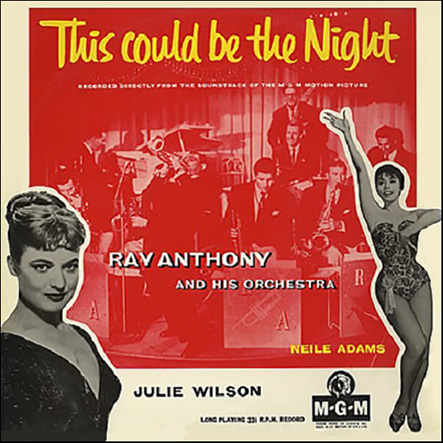
Ruby Neilam Salvador Arrastia, is known in Hollywood as
the actress-singer-dancer Neile Adams—and the first wife of the hottest new
male star of 60s Hollywood, Steve McQueen. Born on Jul. 10, 1932, to Jose
Arrastia of Lubao with Carmen Salvador (sister of character actor Lou Salvador
Sr.), she moved to the U.S. after the war. Adams became a proficient dancer and found
herself being cast in musicals. One of her early appearances was in “Pajama
Game”, staged at the Carnegie Hall. She moved on to TV and films, with credits in the 1952 western “Grubstake”
and as Patsy St. Claire in “This Could Be The Night” (1957).
Husband and wife appeared in a memorable episode in
“Alfred Hitchcock Presents”. Separately, Neile Adams had a recurring role in the TV
series “Five Fingers” as Rita Juan in 1960, and went on to guest star in top TV
shows thrugh the 60s,70s and 80s, like “The Man from U.N.C.L.E.”, “Love
American Style”, “Bob Hope Show”. “The Bionic Woman”, “ The Rockford Files”,
“Fantasy Island”, “Vega$” and “Hotel”. In 1986, Adams wrote “My Husband, My
Friend”, a biography of her husband Steve, who had died of cancer in 1980.
Coincidentally, Neile’s son (Chad McQueen) and grandson, Steven R. McQueen
(Jeremy Gilbert in “The Vampire Diaries”), are both actors. A nephew, Enrique
Iglesias, is a singer and an occasional actor.

U.S. TV Credits: Hawaiian
Eye (1959)
International jetsetter Minda Feliciano was the daughter
of Manuel Valdez Feliciano, a district engineer, and Amparo Santana of Batanes.
Born as Arminda Feliciano on June 1, 1931, her town of origin is sometimes
listed as either Angeles or Guagua. That may be due to the peripatetic career
of her father, who was assigned in different provinces like Bataan, Nueva Ecija
and Surigao.
When she moved to the U.S., she started modeling and auditioning
for acting roles and, in 1959, won a regular slot (she played the hula-dancing
receptionist, Evelyn) in the popular TV series,”Hawaiian Eye”, produced by
Warner Brothers. Her trips around the world led to a chance meeting with actor
Michael Caine. The two were soon engaged, but somehow, things didn’t fall into
place and the couple parted ways. Michael would marry the exotic beauty,
Shakira Baksh in 1973 , win 2 Oscars and be knighted in 2002.
Linked with singer Tony Bennett, Feliciano would form a more
lasting relationship with Norman John McClintock Lonsdale, a true English blue
blood. Romance bloomed and they were wed in 1997. In the Lonsdales’ sprawling
Oxfordshire estate, the couple entertained film star friends like Joan Collins,
Peter Sellers, Britt Ekland and Roger Moore. Minda and Norman would be together
for 12 happy years until his death in 2009. Minda Feliciano currently lives in London in
her ivy-colored house fronting the scenic Thames River.

U.S. TV Credits:
Judy Garland Show (1963), An Evening
with Carol Channing TV Special, 1966), The Smothers Brothers Comedy Hour
(1967), The Tim Conway Comedy Hour (1970), Three’s Company (1976), Good Times
(1976), The Ropers (1978), The Comedy Playhouse (1986)
Behind the camera, Kapampangans have also left their mark
in the American entertainment industry. Leading the way is the venerable George
Sunga, who first joined CBS as a production supervisor of “The Judy Garland
Show” in 1963, and later, “The Smothers Brothers Comedy Hour”. He went on to
produce the hit TV shows "Good
Times," (1974) "The
Jeffersons," (1975) , “All in the Family” (1974) “Three’s Company” (1976) and many other
successful serials. In 1989, Sunga was elected
officer of the Academy of Television Arts and Sciences. For his commitment to diversity in
television, an award in his honor was created and given yearly at the Media
Access Awards. The Sungas are from Guagua, Pampanga.

U.S. Film Credits:
Aladdin (1992), Mulan I & II (1998,2004), Redwood Curtain (1995), ER (2010), Crazy Ex-Girlfriend (2016)
The toast of West End and Broadway, Angeles-born Lea
Salonga (b. Feb. 22, 1971), has also penetrated the U.S. showbiz industry, both
as actress and singer. While still with the hit musical ‘Miss Saigon’ . she was
tapped to sing key songs for such movies as “Aladdin” (1992) and “Mulan” I and II ( 1998, 2004). She had a
once-in-a lifetime experience of singing “A Whole New World” at the 1993 Oscar
Awards, which went on to win Best Song. Salonga was also seen on a 1995 TV film
produced by Hallmark Hall of Fame, “Redwood Curtain”. The film chronicles the
search of an Amerasian piano prodigy for her biological father, aVietnam veteran.
Other credits include guest appearances in hit TV series “ER” , “As The World
Turns” and most recently, as Filipina Aunt Myrna in “Crazy Ex-Girlfriend”.

U.S. Film Credit:
I.T. (2016)
Federico “Rico” Morales Hizon, whose parents come from
Mexico and Mabalacat, respectively, made a name for himself as an international
journalist, but his credentials now include acting in a Hollywood film. In the
2016 film“I.T.” topbilled by Pierce Brosnan, the Singapore-based BBC correspondent portrayed
himself in this nail-biting thriller directed by John Moore.

U.S. Film Credits:
Ghost (1990), Honey, I Blew Up the Kid (1992), Mortal Kombat (1995), the
Phantom (1996), Spiderman 2 (2004), Iron Man 3 (2013), Frozen (2013), Big Hero
6 (2014), Moana (2017)
The visual effects/lighting genius behind contemporary
classic Disney movies is half-Kapampangan (courtesy of his mother) Winston
Quitasol. His talents are put to good use in films that require visual effects, allowing him to
push the technical and technological boundaries of film effects to produce all kinds of
fantastic scenes and imageries. As a visual effects technical director, Quitasol
is responsible for lighting various elements (like a character or FX) for a
specific scene and composing the said elements to a live action background via
computer work. The realistic effect is achieved through his mastery of computer
tricks. On the other hand, as a senior lighting artist, he determines how a
shot should look by observing the environment of the approved scenes or finding
an art director’s color key. By positioning
his lights in the computer, he can match the look and then render out all the
elements he needs to composite the final scene.
Quitasol has worked on a slew of high profile Hollywood films ,
and his first unforgettable assignments was the megahit “Ghost” from 1990,
starring Patrick Swayze and Demi Moore. His more recent works include “Spiderman
2”, “Surf’s Up”, “Iron Man 3”, “300: Rise of an Empire , “Frozen”, “Big Hero
6”, “Moana” and “Olaf’s Frozen Adventure”. Quitasol works at the Walt Disney
Animation Studios, California State University-Long Beach

U.S. TV Credits: Bill
and Yed’s Excellent Adventures (1990), King of the Hill (1993), Futurama
(1999), The Simpsons, Season 19: Eternal Moonshine of the Simpson Mind (2007).
Animator Jesus “Jess” Española, from Lubao, is the only
full Filipino winner of the
the prestigious primetime Emmy Award for his 2008 work on
“The Simpsons ( ‘Eternal Moonshine of the Simpson Mind’ episode). Raised by his
single mother, Española struggled to finish high school by taking on odd jobs
like baby-sitting and washing dishes. He saved enough money for his Fine Arts course at the University of the Philippines.
Española found work as an animator for
Burbank Animation in Makati, then moved to Fil-Cartoons, which was contracted
to create animation for Hanna Barbera cartoons like the popular Flintstones,
Scooby Doo and Jonny Quest. So adept did Española become, that he was sent to
the head studio in the U.S. where he found employment when the Philippine
office closed.
His first assignment was at Film Roman for “King of the
Hill,”, one of the primetime shows of Fox, that also includes Matt Groening’s
“The Simpsons”. Soon, he was doing character layouts for “The Simpsons”, rising
to become its assistant director. Espanola’s win at the Emmys validates the common
knowledge that Filipino animators are among the best in Hollywood.”A lot of
Filipino artists are in the cutting edge of the animation industry. I guess I
am lucky that I worked with "The Simpsons," said Jess, the poor boy
from Lubao who made good.

U.S. TV Credits:
The Fairly Odd Parents (2014), Sullivan and Son (2014), Sing It (2016), My
Little Pony (2016-17), The Great Indoors (2016-17)
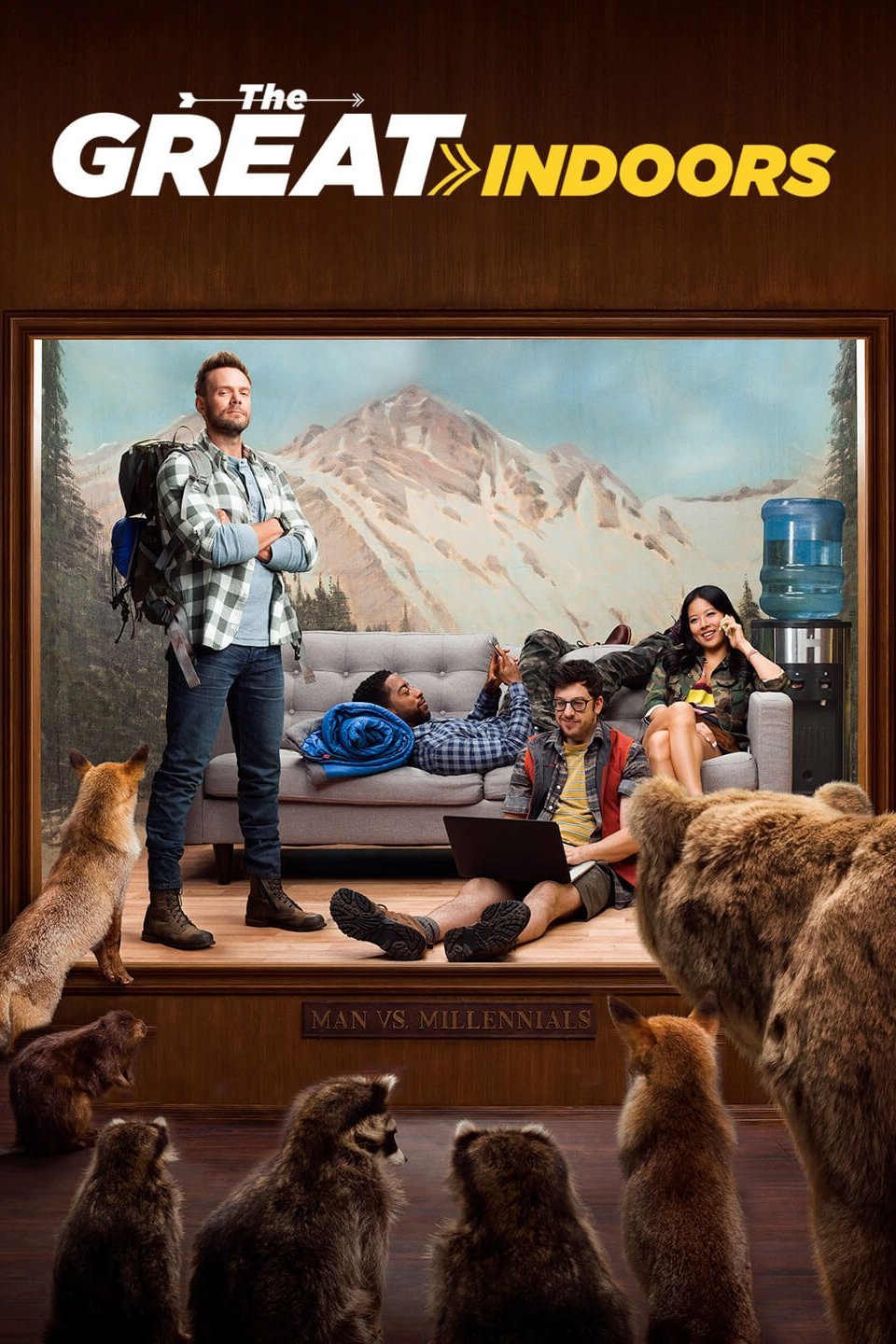
In the CBS TV sitcom “The Great Indoors”, Kapampangans
were treated to a January 2017 episode in which the characters of actors Joel McHale
and Stephen Fry, spoke in Kapampangan—albeit, with a thick American
accent—so they could disguise their secret plan to leave young campers in the
wild without their smartphones. The language got a lot of online attention
after Pampanga-born Christ Sundita posted it on facebook. It turned out that
the idea was conceived by story editor/
writer, Kristine Songco (b. Dec. 6, 1985),
a Cal State Fullerton honors graduate in 2007. She worked on Nickelodeon shows like “The
Mighty B!”, “Fanboy” and “Chum Chum”. Her writing gigs have come to
include “The Great Indoors”. Or that
much-talked about ‘Kapampangan’ episode, Kristine sought the help of her father
in crafting the dialogues. The Songcos are a prominent family from Guagua.
 ALLEN EVANGELISTA

U.S. Film & TV
Credits: Project Almanac (2015), Ghost Whisperer (2010), The Secret Life of the
American teenager (2008-2013), Mozart and the Whale (2005)
From appearing in commercials (American Online, MTV, Time
Warner Cable, Domino's), Allen Evangelista
transitioned to TV easily, beginning
with ABC's "Once and Again" , "Alias", and a lead role in
"Mozart and the Whale". Evangelista was born in Los Angeles to a
Kapampangan mother, Aurora (from Angeles), and Alfredo Evangelista from Manila.
He last visited Pampanga when he was 7 years old. After starring in popular
teen shows, he snagged his first major film in 2015 with “Project Almanac”,
where he essayed the role of Adam, the 16-year old tech-savvy geek who builds a
time machine. The youthful-loking Allen was, in fact, already 33 years old at
that time.
U.S. Film & TV
Credits: Grey’s Anatomy (2012), The Inevitable Defeat of Mister and Pete
(2013), Bad Worlds (2014), Get a Job (2016), Spiderman: Homecoming (2017),
Avengers: Infinity War (2018)
Young Ethan Dizon (b. 2002), is the son of Eric Dizon,
who traces his ancestry to the Dizons of Mabalacat. His mother is
actress Corinne Chooey, while two younger brothers are also actors. Ethan made
his acting debut as a 3 year-old child actor in the CBS hit series, “How I Met
Your Mother”, He then had guest roles in
“Grey's Anatomy”, and “'Til Death”. His film credits include: “Get A
Job”, “Bad Words” ( with Jason Bateman), and the “The Inevitable Defeat of
Mister and Pete”, where he is best-known for playing Pete. In 2018, he will be seen in “Avengers:
Infinity War”. A gifted artist, he was nominated for Best Actor at the NBCU
Short Film Festival 2014 in "Paulie", where he played the title role.
CREDITS:
ROSA DEL ROSARIO PHOTO: www.viewsfromthepampang.blogspot
Anna & the King: http://www.coversresource.com
ROGELIO DELA ROSA PHOTO: Alex R. Castro
Avenger: Constantino, Ronald, editor, The Golden
Years: Memorable Tagalog Movie Ads, from the collection of Danilo Dolor.
NEILE ADAMS PHOTO: wikicommons, wikipedia
This Could be the Night: http://img.soundtrackcollector.com/cd/large/This_could_be_night_c761.jpg
MINDA FELICIANO PHOTO: http://www.zimbio.com/photos/Minda+Feliciano
Hawaiian Eye: https://www.fan.tv/shows/93-hawaiian-eye
GEORGE SUNGA PHOTO: youtube, Archive of American
Television
Three’s Company: www.amazon.com
LEA SALONGA PHOTO: https://i.pinimg.com/736x/b6/dd/47/b6dd476ef94f0d42cbdf179dba2d5f45--broadway-theatre-broadway-musicals.jpg
Redwood Curtain Poster:
RICO HIZON PHOTO: twitter.com
I.T. Poster: IMP awards
JESS ESPANOLA PHOTO: courtesy of Ruston Banal
Photography
The Simpsons: www.amazon.com
WINSTON QUITASOL PHOTO: balita.com
Frozen:http://www.imdb.com/title/tt2294629/mediaviewer/rm3873693440
ALLEN EVANGELIST PHOTO: biphoo.com
Project Almanac:imdb. Project Almanac entry
ALLEN EVANGELIST PHOTO: biphoo.com
Project Almanac:imdb. Project Almanac entry
KRISTINE SONGCO PHOTO: Kristine Songco FB page
The Great Indoors: http://www.gstatic.com/tv/thumb/tvbanners/12909901/p12909901_b_v8_ab.jpg
ETHAN DIZON PHOTO: http://p01.lacasting.com/photos/9/M/5/337759-52.jpg?20150908154140937
Mister & Pete: www.amazon.com