The American
contribution to Philippine education began with the arrival of Thomasites – a
band of American teachers who came to our shores in 1901, lured by a sense of
adventure, prospects of employment in the exotic Far East. and a genuine will
to serve and build a new nation. Here is a select group of these pioneering
teachers who served in Pampanga and Tarlac.
**********

1. GEORGE N, ANDERSON, Arayat, Candaba
George N. Anderson’s commitment to advance education in
the islands was so total, that when the school in Candaba was razed to the
ground , the supervising teacher shelled out Php 500 from his own pockets as
his contribution towards the rebuilding of the school. As a pioneer teacher in
Arayat, Anderson put up an intermediate school to teach Grades 4, 5 and 6
students (a primary school was already up, that took in Grades 1-4 pupils). Established
in 1909, the intermediate school would be named in his honor: Anderson
Intermediate School, which operated under that name from 1909 to 1974. It then
became Anderson Elementary School, offering complete Grades 1-6 classes. A
fellow teacher by the name of Carrie E. Anderson taught in Arayat at the same
time as George did; she may have been his wife.
2. ALFRED ARNOLD,
Apalit, Arayat
Thomasite Alfred Arnold
was assigned as a primary school teacher to handle Grades 1 to 4
classes, in Arayat. He is well known for taking the extra step to win over
Filipino officials who were indifferent to the idea of public education
propagated by the U.S. The assiduous teacher organized and staged special
programs of entertainment at his schools to interest the native town heads and
gain their support and cooperation.
3. WILLIAM M. CARRUTH,
Betis, Sta. Rita, San Simon
A young graduate of Cleveland, Ohio, William Carruth
arrived in Betis in 1901 and was immediately besieged with problems---all the
books in the school where he was supposed to teach were in Spanish. He wrote to
the Dept. of Public Instruction for help, and soon, the right supplies arrived
and school operations began to run smoothly—until he fell ill. But Carruth carried on, even making himself
available to teach geometry, algebra and physics at a teacher’s program in San
Fernando. The Betis school was abandoned due to poor facilities and financial
constraints. Carruth, thus, moved to
Sta. Rita, where he began anew to organize the primary school, plus 2 barrio
schools. Faced with incompetent teachers and apathetic town officials, he
finished his term in 1903, and then moved to San Simon. Carruth was an
efficient, professional administrator, but the of support from his superiors
and the community, perhaps wore him down to frustration. Carruth did not renew
his 3-year contract and returned to the U.S.

4. W. HUSE CHAPMAN,
Angeles, Zambales
W. Huse Chapman, of Connecticut, was a civil servant of
the U.S. Bureau of Education and worked as a Thomasite teacher among the Negritos
in the Philippines, in the Zambales region. He was deployed to Angeles,
Pampanga as Supervising Teacher. While there, Chapman took an interest in
photography and took ethnographic portraits, of
Negritos, their customs; activities; dwellings, structures and other
material culture; and natural surroundings. Specific subjects include basket
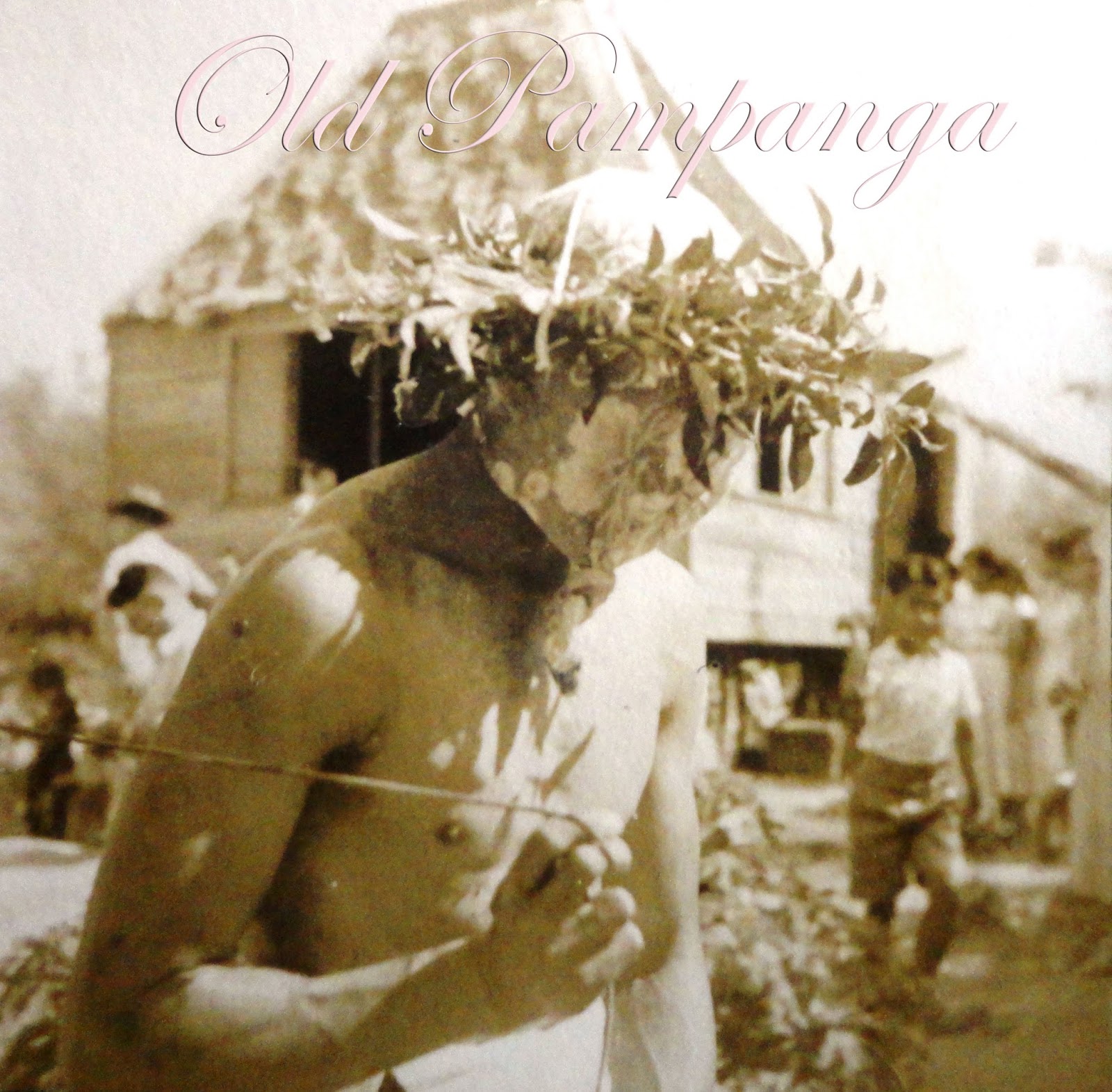
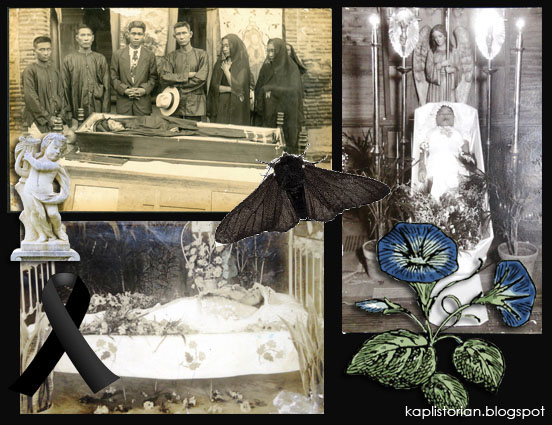
weaving, a burial, scarification, and a group of hooded self-flagellants. These
163 photos compiled in 1909, are in the Bancroft Library of the University of
California Berkely.
5. ADAM C. DERKUM,
Mexico, Tarlac, Zambales
Born in 1874, Adam C. Derkum studied and graduated from
the University of Southern California. He was appointed to the civil service on
30 December 1903. On 1 March 1906, Dr. Adam Derkum, together wife Agnes, were
assigned to Mexico, Pampanga. He became a supervising teacher then rose in
position to become a Division
Superintendent of schools in Zambales and Tarlac. He had a new building erected
at a new location in 1915 after the Tarlac Provincial High School had incurred
much damage wrought by usage and time. He also organized training programs for students, through teacher camps and educational missions.
As part of the American effort to promote physical education and national
fitness, Dr. Derkum help found the Philippine Amateur Athletic Federation, along
with Manuel L. Quezon, Camilo Osias, Regino R. Ylanan and Jorge R. Vargas. He was
chosen as President and Chairman of the
1926 Pampanga Fair and Provincial Garden Day, This was to be one of his last major activities as the Derkums and their
four Philippine-born children, returned to America where they would spend rest
of their lives in California.
6. LULU LONG HIGLEY,
Bacolor
Born on 1 Oct. 1874 in Lagrange County, Indiana, Lulu
Long-Higley and her husband Levi Campbell Higley (b. 1871/d.1959) taught
together at Bacolor and at the Pampanga Industrial School. Lulu herself, taught
industrial arts. Husband Levi was the
assigned to an industrial school in Lipa, Batangas, and assumed the position of
principal of the secondary school. Lulu Higley remained in Bacolor, where
eldest son Phillips Isidors was born. When Higley returned to her husband’s
home state, she gave birth to two more sons: Ralph and Erwin Isaac. She passed
away in Genesee county on 21 Mar. 1951 at age 76, and she is interred with her
husband at the county’s Springvale Cemetery.

Pennsylvanian William Segner Irey was born in 1872, in
West Chester county, an education graduate of West Chester State Normal
College. After a 13-year teaching stint
in his home state, he would joined the contingent of teachers sent to the
Philippines in 1901. He was stationed in Magalang, where
he is credited with establishing the elementary school in the poblacion. Irey
would be moved around Pampanga, living in Mexico and San Fernando, and also
serving in Bataan as a 3rd grade supervisor. Irey was also an
inventor of some sorts; obtaining patents for such ingenious creations as a
cigarette-producing machine, a cooking apparatus, change-speed gearing and improvements to kerosene lamps.
8. KILMER O. MOE,
Magalang
Upon arrival in the Philippines, Thomasite Kilmer O. Moe,
from Hoople, North Dakota, was assigned to teach in Magalang. His interest in
agriculture was piqued when the “Granja Modelo”, a pilot agricultural school
founded in 1885 by Spaniards, and later renamed “Estacion Pecuaria” became
idle. Together with Assemblyman Andres Luciano, Moe—now a district supervisor--
initiated its reconstruction in 1917. The Bureau of Education threw its support
behind its reopening and Gov. Honorio Ventura donated more funds to aid the
project. Thus, the Magalang Farm School was born. Moe was also involved in the
restoration of the Central Luzon Agricultural School which opened in Muñoz,
Nueva Ecija on 10 Jun. 1909. After suffering typhoon damage in November, Moe
initiated changes such as the use of strong materials for the school buildings.
Additions included student dorms, a
superintendent office, a house for American teachers, a machine shop and a
sawmill. Kilmer O. Moe wrote many treatises about various aspects of Philippine
farming, including rice and sugar planting.
9. JOHN W. OSBORN,
Angeles, Magalang, San Fernando
John W. Osborn is known for being the first principal of
Pampanga High School in 1908, the most revered institution for secondary
education in the province. PHS would produce
a president, eminent scholars,
writers, politicians, military leaders, lawyers, and builders of our nation. Osborn was from Bringhamton, New
York, a 1901 graduate of Western Reserve
University, Ohio . Before his assignment in the capital town, he was minding
the affairs of the elementary schools in Magalang (1904) and Angeles (he rented
the ground floor of the Gomez/Masnou House with Marion Huff, another
Thomasite). PHS originally was located at the Eusebio Residence located near
the town plaza, with classes opening in 1908. Enrollment was so low that it was
unable to form a senior class until 1911-1912. As student population grew, the
school was transferred to a new building near the Provincial Capitol. It was
Osborn who chose future Justice Jose Gutierrez David to deliver a speech
before Secretary of War, William Howard
Taft and presidential daughter Alice Roosevelt, during their visit to San
Fernando in 1904. In his unpublished memoirs, Justice Gutierrez recalled that
“Mr. Osborn was quite satisfied and
elated judging from the manner he congratulated me. For me, that was enough”.

The most high-profile Thomasite Pampanga, Luther Parker
was born in Missouri to James R. and Mary C. Parker, in 1872. A graduate of the
State Normal School in Chico, California, he arrived in the Philippines in 1901, and served in the Bureau of Education
for twenty-five years, the last 7 years as division superintendent of schools. His
first assignment was Masantol, then in Arayat as Supervising Teacher, and the
town postmaster. He was also a regular contributor of articles for Manila
Times. Parker’s accomplishments included writing a “Diccionariong Ingles,
Kapampangan at Kastila," in 1905, studying Philippine linguistics, and
initiating the writing of town histories. Parker became the Principal of the
Bacolor Trade School in March 1907, as well as General Inspector of school
shops in the country. He was assigned from 1914-1916 in San Francisco to
oversee the Philippine exhibit of school
industrial work. For his achievements, Kapampangan officials proposed to adopt
Parker as a son of Pampanga province. Parker also served in Pangasinan ( 1918, promoted food production campaigns
and gardening), Ilocos Norte, (1921, organized
Bands of Mercy , mainly a children’s group that championed kindness to animals)
and Nueva Ecija (1922-26). He retired and lingered in the country until 1931,
when the Parker family left the country for good. The Parkers took up residence
in Santa Cruz, California. He passed away in 1948. His collection of pictures,
memorabilia, albums of clippings are kept in the University of the Philippines.
11. CARROLL A.
PEABODY, Mabalacat, Tarlac
Thomasite Carroll Peabody, a fresh graduate of Western
Reserve University in Ohio, was first assigned to Mabalacat in 1902 where he
became a “maestro Americano” , teaching his Kapampangan pupils in nipa and
bamboo classrooms. He later became a supervisor, then a Division Superintendent
in Tarlac. His wife, Emma, was also a teacher. Also assigned there was Joseph
L. Flaherty, a Supervising Teacher as of 1906. Peabody documented the hardships
of setting up schools and keeping them running despite inadequate supplies
(billiard cue chalk were sometimes used as blackboard chalk), in his
unpublished memoirs, “Personal Reminiscences of Early Days, 1898-1902”.
12. FRANK RUSSELL
WHITE, Tarlac
Thomasite Frank Russell White was born in Millburn, Illinois on 8 June
1875. He has the singular distinction of opening the first provincial high
school in the Philippines—Tarlac High School on 1 Sep. 1902—and was its first
principal. The high school had an initial enrolment of 35 students which grew
to 93 before the end of that year. White served for 2 months, and then appointed
Division Superintendent for Tarlac province. The high school he founded would have
a permanent 2-storey building of Oregon
pine, a 76 feet long and 42 feet wide. It was built though the initiative of
his successor, Mr. S.C. Campbell, at a cost
of Php 48,000. It opened in 1904. White rose to become the 4th
Director of Education of the Philippine islands, but died an early death due to
an illness on 17 Aug. 1913. Unfortunately, the heritage building was razed
by fire on 28 Oct. 2015. For years, tales of a “white ghost” haunting the high school
were often heard—but this must have been simply a reference to the teacher who
made history in Tarlac—Mr. Frank Russell White.
A COMPREHENSIVE
LIST OF THOMASITES ASSIGNED TO PAMPANGA & TARLAC
Albright,
Henrietta M., Tarlac, Tarlac
Anderson, Carrie E.
Arayat, Pampanga Intermediate
Ansbro, Lucinda,
Tarlac, Tarlac
Bass, James H.
Apalit, Pampanga Supervising Teacher
Briggs, George N.
Surigao, Surigao, Cagayan and Misamis; San Fernando, Pampanga and Bataan
Division Superintendent
Campbell, S.A.
Tarlac, Tarlac; Cavite Division Superintendent
Carleton, Charles
W. Bacolor, Pampanga Industrial School
Derkum, Agnes M.
Mexico, Pampanga Intermediate School
Flaherty, Joseph L.
Mabalacat, Pampanga Supervising Teacher
Franke, Walter E.
Florida-Blanca, Pampanga Supervising Teacher
Gambill, J.M.
San Fernando, Pampanga Supervising Teacher
Gammill, J.A.
Iloilo, Iloilo andAntique; San Fernando, Pampanga and Bataan Superintendent
Gascon, Osmond
Guagua, Pampanga In Charge Barrio School
Higley, Levi C.
Bacolor, Pampanga; Lipa, Batangas Industrial School; Principal
(Secondary school)
Howard, Joseph G.
Apalit, Pampanga Industrial School
Huff, Marion
Bacolor, Pampanga Industrial School
Manns, Alys E.
San Fernando, Pampanga Provincial High School
Manns, Thomas F.
Balanga, Bataan; San Fernando, Pampanga Principal, High School (in charge)
Mayo, William L.
Tarlac, Tarlac Provincial High School
McGee, Fannie,
Tarlac, Tarlac
Preuitt, William
E. San Fernando, Pampanga and Bataan Superintendent
Reimold, O.S.,
Tarlac, Tarlac
Rudy, Abraham
Macabebe, Pampanga Supervising Teacher
Russell, Florence
E. Tarlac, Tarlac Provincial High School
Russell, H.C.
Laoag, Ilocos Norte; Tarlac, Tarlac Principal, High School
Shearer, Lucy B.
San Fernando, Pampanga Provincial High School
Vaughan, William
T. Candaba, Pampanga Supervising Teacher
Williamson,
Katherine P. San Fernando,Pampanga Provincial High School
Young, Katherine M.
San Fernando, Pampanga Provincial High School
SOURCES:
Alan Derkum, Carroll Peabody, John W.Osborn : www.viewsfromthepampang.blogspot.com
Lulu Long-Higley: https://www.findagrave.com/memorial/25692851/levi-campbell-higley
Frank Russell White: http://www.tarlachs71.com/about_tarlac_high_school.php,
Photo of Kilmer O. Moe's calling Card: Doris Manlapaz, Magalang Historical Society
Photo of Luther Parker in Arayat: John Tewell, flickr.com
Bulletin, Vol. 1, No. 25. https://quod.lib.umich.edu/p/philamer/acp1028.0001.025?rgn=main;view=fulltext
Dizon, Lino L., Mr. White, A Thomasite History of Tarlac
Province 1901-1913, in Honor of Frank Russell White. Published by the Center
for Tarlaqueño Stduies and the Center for Kapampangan Studies, 2002.
Larkin, John A. The Pampangans,: Colonial Society in a
Philippine Province © 1972 The Regents of the University of California, 19913
Edition by new ay Publishing. Pp.143-157.
Gutierrez-David, Jose. The
Story of my Life, unpublished memoirs