Showing posts with label Christmas. Show all posts

Sunday, December 10, 2017

68. 12 GIANT SAN FERNANDO LANTERN TRIVIA

COLORFUL 'SAMPERNANDU' LANTERN, Magazine Cover, Esso Silangan, 1965

The famed San Fernando giant lantern is a product of Kapampangan innovation, creativity and tireless effort. So the next time you witness their spectacular display of lights, color and dazzle, do appreciate the hard work put into each of these works of art that can be considered truly Kapampangan. Here are vintage photos and trivia about this Christmas parul that put Pampanga in the world map.
**********
EARLY LANTERN PHOTO, SAN FERNANDO.  Taken 26 Dec..1909.
Luther Parker Collection.
1.This predecessor of the modern day Giant Lantern Festival was actually a religious activity which we know today as “lubenas.” The lanterns measured just two feet in diameter, created in each barrio from bamboo and other locally available materials. During the nine-day simbang gabi novena before Christmas, these paruls were brought around each barrio in procession to their visita. Before the midnight Mass on Christmas Eve, the lanterns were brought to the town church together with the barrio patrons. This tradition gradually evolved as the lanterns became bigger and the designs more intricate. Later, one big lantern was made for each barrio, which was created through a cooperative effort.
 
TYPICAL SAN FERNANDO PROCESSIONAL LANTERN,1960,
2. The first documented lantern maker was Francisco Estanislao, active ca. 1908, from Barrio Sta. Lucia, San Fernando. “Apung Isku”, aided by his wife, crafted paruls in the 1900s using bamboo sticks, cotton, string, satin and coco fabric panels, which were glued to the framework using gelatinous rice paste. The back is left uncovered to accommodate the ‘kalburo’ (carbide) lights.

 
DEL PILAR GIANT LANTERN, 1940s
3. The San Fernando Giant Lantern Festival, which is held every December, finds its roots in Bacolor where a much simpler activity was held. Following the transfer of the provincial capital from Bacolor to San Fernando in August of 1904, this parul event followed as well.

STO.NINO GIANT LANTERN, in 1956
4. The earliest mention of a lantern procession that culminated in a lantern contest, was reported in the religious publication  in a 1930 issue of,“Ing Misyonero”, (year 4, no. 11) that was won by brgy. Del Pilar, followed by Sto. Niño. The next year,  it was reported in the same magazine that eight  barrios participated in the Christmas pageant  that was highlighted by lively band music and a colorful lantern competition with Del Pilar achieving a back-to-back win.

LANTERN PARADE IN SAN FERNANDO, 1960
5. It is believed that electricity was introduced to the San Fernando lantern in 1931. At this time, the lights were controlled by individual switches that were turned on and off following the beat of the music. Pioneer participants included the barangays of Del Pilar, Sta. Lucia and San Jose.

GIANT LANTERNS, from 1960
6. According to another version claimed by old folks, the Giant Lantern Festival started during the time of Pres. Manuel L. Quezon. At that time, Quezon was trying to make Pampanga a model province. In fact, he made Arayat his vacation place and converted the legendary mountain into a tourist resort. As a show of gratitude to Quezon, the people of San Fernando held a Christmas lantern contest to honor the first family. Quezon himself donated the prize for this lantern contest, which was personally awarded to the winner by First Lady Aurora Aragon Quezon.

SAN FERNANDO LANTERN EXHIBIT, Luneta. 1961
7. Severino David, married to Fortunata Estanislao (daughter of Francisco) is credited with introducing the battery-operated giant lanterns in the 1940s. Great strides in the 1950s made the San Fernando Giant Lantern more visually impactful. Steel wire was introduced in 1950 by Mario Datu and Susing Manalang for use in making the framework of the lantern, thus making it stronger.

INTRICATE LANTERN DESIGN, 1965
8. In 1957, Rodolfo David  invented the rotor system that used ordinary hairpins, attached to the end of the wires leading to each individual bulb. Masking tape strips are placed on the rotor to serve as light switches. As the rotor is turned, the hairpins brushes the tape strips, thus cutting off the current flow that lit the bulbs. When that particular hairpin regains contact with the steel rotor, the bulbs are again lit. Thus, the placement of the tape on the rotors determines the interplay of lights on the lanterns and can spell success or disaster for each entry.

SAN FERNANDO LANTERNS used in a San Miguel Beer Ad.1969
9. The lanterns gained national prominence in 1960, when, the Board of Travel and Tourism Industry and the Philippine Tourist and Travel Association sponsored the San Fernando lantern parade in front of the Luneta Grandstand. Beginning in 1964,  San Fernando lanterns became available for sale to the public, giving birth to the commercial lantern industry.

SAN FERNANDO LANTERNS, 1969

10. The Giant Lantern Festival, which was already an established San Fernando institution was cancelled for two years (1978-1979) by Mayor Armando Biliwang  because of Martial Law. It was revived in 1980. In 1987, Former San Fernando Mayor Virgilio “Baby” Sanchez started producing Capiz lanterns for the export markets, with MAKVEL Enterprises. These lanterns followed the traditional San Fernando design and were developed with the assistance of the Design Center of the Philippines. The next year, the first fiberglass lanterns were installed at the Pampanga Convention.

SAN FERNANDO LANTERN, 1979
11. The new 90s decade saw the transfer of the annual Giant Lantern Festival to the Paskuhan Village. The lanterns made international appearances at the World Expo in Seville (1992), and at the Hollywood Christmas Parade (1993). The festival venue was relocated to the open parking grounds of the SM City Pampanga at the turn of the new millennium.

LANTERN MAKER, Jesus Maglalang. 1979
12. The best-performing barangays in the Giant Lantern Festival Competition include Del Pilar, which had an incredible 9-year winning streak in the 1980s. before that, Sta. Lucia was a perennial champion. Brgys. San Felipe and Telabastagan almost became Hall of Famers (3 championships in a row) in the first decade of the 2000. In recent times, Brgy. Dolores has bagged the championship 4 times in a span of 10 years.

BONUS!
Double Take: LANTERN LOOK-ALIKES
TRADITIONAL MEXICAN WREATHS, have designs that mimic that of the famed San Fernando lanterns. Could these have been design inspirations as we also have a history of Mexican-Philippine relations? Or just plain coincidence?

VERY ENGLISH, VERY SAMPERNANDU. A giant lantern of English make has a striking similarity with the giant San Fernando lantern of San Jose. Taken at the Covent Garden, London, 1965.

SOURCES:
Henares, Ivan Anthony S. (2001). HOW TO MAKE A GIANT LANTERN: The story Behind the Giant Lanterns of San Fernando. School Project. University of the Philippines.
HISTORY OF GIANT LANTERN-MAKING IN SAN FERNANDO, PAMPANGA (Estanisla-Davido-Quiwa Clan), by Landlee Quiwa
HISTORY OF THE LANTERN INDUSTRY : Its Contribution to the Local Economy and Tourism, Oct. 4, 2016, Makati City
Thanks to: Ching Pangilinan, CSF Tourism, Ken Gardiner

Friday, December 30, 2016

31. FRANCIS MUSNI’S TOP 10 POPULAR FOODS THAT KAPAMPANGANS OFTEN SERVE FOR CHRISTMAS

LORD FRANCIS MUSNI  is not only a connoisseur of good Kapampangan food, but is also a self-trained culinary wiz . When not busy with his work at the Municipal Trial Court in Cities at San Fernando, Francis spends time in his newly customized, old-world style kitchen in his Bacolor home, whipping up classic Kapampangan dishes for family and friends. He hopes to open his “kusina” to visitors soon.  Francis also does consultancy work for the Center for Kapampangan Studies, and is an instructor and museum curator of Don Honorio Ventura Technological State University. He has appeared many times on local and national media as a resource person on various aspects of Kapampangan culture, especially our culinary arts. Currently, he is one of the hosts of “Umpukang Kapampangan” over RW 95.1 FM, a program dedicated to spreading Pampanga’s cultural heritage and its arts. Meanwhile, he shares with us his list of some of the most popular foods that are a part of every Kapampangan’s holiday table every year.


* * * * * *
1. LIGANG PASCU. A soup that is a complete meal in itself. An otherwise regular daily fare becomes a traditional Christmas special when prepared with long, simmered ham bone, beef, pork and chicken with potatoes, cabbage, saguin saba, labanus, pechay, Baguio beans, white onions, and whole pepper corns with generous slices  of sang  (onion leeks). It is a staple on noche buena and media noche that cuts across social classes; it is a great social equalizer. Every Kapampangan home, palatial or humble, has it.


2. ALE. Jam prepared at Christmas time could be gandus (white yam), copis (red monggo bean), bule (kidney beans) and the ubiquitous and color-of-the-season ubi (purple yam). The tedious process begins with harvesting, boiling, mashing and cooking the jam into a rich well-done (malaniad, manangnang).consistency with aid of a trusty heirloom kawa in makeshift earth stove dug from the ground. The best ale should keep for at least 3 days.

3. SUMAN TILI/SUMAN PASCU. This is a delicacy of steamed sticky (lacatan ) rice wrapped in young banana leaves. It used to be available only at Christmas time in the pre-commercial kakanin era. You had to make it, hire someone to do it, or specially order it from someone (by asking to share in her expenses in doing her own and a little extra). It used to be given out as an aguinaldo to family and friends who went "manyiklod" on  Christmas and New Year's Day. Outside of Christmas,  they call them suman tili becuase one had to roll them (tili) like fat cigars. Be careful in buying your lacatan lest it be samutan and you end up with a half  or unevenly cooked (magadtu) suman.

4. CALAME. This is a generic Kapampangan term for rice delicacies shaped in the form of a cake. Calame making in this busy days is a tradition on the verge of extinction. The long and arduous process of making it has discouraged many and has given birth to an industry. Calame can have several names depending on the main ingredient and the place where it comes from. It could be simply calame nasi (literally, rice cake) or it could be calame duman, ubi, culubasa (which is also called bico), patulbad and pituclup (in Sasmuan). Warning: calame, beer and firecrackers are a bad combination.

5. HAMUN. Traditionally, Kapampangans got.their hamun from the.local Chinese store. It was either Hoc Siu, King Sue.or Marca Pato. The best ham was hamon de funda (whole leg ham bone-in and neatly tied in net stocking). The burgeoning sugar industry of the rich sugar planters and landlords preferred imported Virginia ham. Now local ham is produced and is supplied by several popular homegrown meat processing industries. The Kapampangan is likely to expect ham as a Christmas gift from his boss or trading suki. Employees proudly display their hams on the way home from their last day of work or after their Christmas party. As one popular ham brand puts it, the ham is the "star of the noche buena"

6. SUCLATING BATIRUL. Kapampangans will only go for the Chocolate "e". Richly prepared from a ground paste of well roasted cacao and mani ground with a gilingan batu, boiled in a pohia or batidor with gatas damulag added in and frothed rich and creamy with a molinillo, the suclating batirul is to die for. Albeit, the southerners (Ilonggo and Cebuanos) think it is adulterated, the Kapampangan wants his chocolate with peanuts still. The chocolate goes well with duman, suman or a magapuc (brittle) cookie like sanicolas, mamon tostado (sopas) or masa podrida.

7. BARBEQUE. An American vestige that refuses to leave the Kapampangan, each household prides itself with its own homemade pibabaran (marinade). The barbeque is served as one of the viands, a pulutan and a "pipali-pali" the day after.

8. FRUIT SALAD. Another American influence that celebrates the PX tradition of the Kapanpangans. One preferred Ligo as the best brand by far unlike other cheaper commercial Philippine syndicated.brands, which consists mainly of pineapples, papaya and pineapples. Kapampangans stock up on cans.of fruit.cocktail, whipped cream and condense milk as early as October, as grocery shelves go empty by early December.

9. BIBINGCA and PUTU BUMBUNG. Very popular post-Simbang Bengi treats,

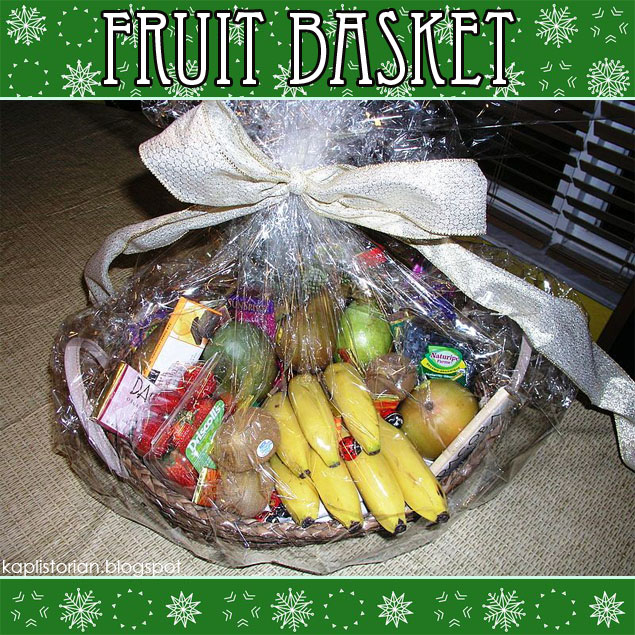
10. A BASKET OF IMPORTED  FRUITS.  Not normally purchased on ordinary days,

PHOTO SOURCES:
LIGANG PASCU: Adda Morena Canlas Musni FB page
ALE: Betty Ann Besa-Quirino, http://www.asianinamericamag.com/
SUMAN TILI: Ruston Banal FB page
CALAME: Reyjay Manago FB page
HAMUN: Robby Tantingco FB page
SUCLATING BATIRUL: Insights Magazine, http://chocolatedebatirol.com/
BARBEQUE: Ralf Laurence Bonifacio FB page
FRUIT SALAD: Guagua Pampanga Kabalenan FB page, 
FRUIT BASKET: https://commons.wikimedia.org/wiki/File:Wrapped_fruit_basket.jpg
BIBINGCA/ PUTU BUMBUNG: Ivan Henares twitter photo

Friday, December 23, 2016

30. BETTY ANN BESA-QUIRINO’S LIST OF 18 FAVORITE KAPAMPANGAN SWEETS AND DISHES FOR THE HOLIDAYS.

A KAPLISTORIAN EXCLUSIVE! Award-winning foodie writer, Betty Ann Besa-Quirino shares with us her list of must-serve Kapampangan holiday fare. She writes: "Pampanga is a neighbor to my home province, Tarlac so a lot of the Christmas treats we enjoyed in my childhood were inspired by our neighboring Kapampangan friends and family. It is a fact, that every Pampango host ends every meal with a great dessert – these Petit Fortunes, a classic example. These gastronomic tiny treats were regular fixtures of our holidays."

PETITE FORTUNE. Tiny, bite-sized sweet pastries made of casuy nuts (cashew) eggs and butter.

BIBINGKANG NASI. Sticky rice cake made from malagkit rice, with sweet coconut cream topping. An all-time favorite kakanin!

HALEYANG UBI. For my “ube haleya” (ube jam). I buy fresh purple yams at the Asian markets when they’re in season the last months of the year from October to December. The tuber is peeled, boiled, then mashed, mixed and cooked with milk, sugar and butter. Some recipes call for mixing it with coconut cream or grated coconut meat. In all these ways ube is utterly delectable.

BOBOTU, or TAMALES. Our version of the Mexican tamales makes use of a seasoned mixture of rice flour, coconut milk, fish sauce and annatto oil. A large dollop of the tamales mixture is topped with slivers of chicken, slices of boiled egg, ground peanuts, wrapped in banana leaves then cooked in a steamer.

BIBINGKANG CAMOTENG DUTUNG. Good old fashioned cassava cake. Made with grated cassava, milk, coconut milk and cream, sugar and eggs.

PUTUNG LASUNG. The ubiquitous putong puti are steamed rice cakes that can be found in almost any pasalubong center in Pampanga. The original putung lasung makes use of ground glutinous rice, and are a perfect match with sopas, tidtad and any kind of pancit.


SUMAN INANGIT. A quick-fix kakanin simply made from from malagkit rice and coconut milk, flavored with salt. The mixture is cooked and stirred until almost dry over low heat, and covered with banana leaves to give it a nice aroma. Portions of the cooked mixture are then wrapped in banana leaves to become suman inangit!

CAPAMPANGAN ENSAIMADAS. The Capampangan Ensaimada prides itself in using NO LESS than 24 and up to 36 egg yolks. Anything less would be a major offense.

TAISAN DE PAMPANGA
A classic sponge cake loaf,  similar to mammon, but heavily buttered on top, then sprinkled with sugar, and sometimes with fine grated cheese. So-called because the slim, rectangular load often wrapped in cellophane, is shaped like a whetstone—a “taisan”.

TOCINO DEL CIELO. Small, cup-shaped Spanish flans, purely made from egg yolks, water and sugar. The creamy caramel desserts are a specialty of my late mother-n-law Remedios Pineda Quirino, who was from Sta. Rita, Pampanga

BICO CULUBASA. Sticky rice combined with squash, which gives this kakanin its trademark  light brown color.

CHICKEN GALANTINA. Chicken Galantina is a stuffed, deboned chicken dish popular during the holidays. It takes patience and time to concoct this dish, as it involves the laborious preparation of the stuffing (made from ground meat, sausage, hard-boiled eggs, spices, pickle relish, raisin, carrots,etc.), as well as the long steaming process. But the flavorful results is certain worth the wait.

KALAME DUMAN.  Duman, a fragrant green rice variety,  is only in season during Christmas, so it is prized by many Kapampangans, who often store duman in their refrigerators, to be taken out for making their special “kalame duman”, or for dunking  into a steaming hot cup of tsokolateng binatirul, until the grains bloat.

KALDERETANG KAMBING– Goat stew, a favorite entrée of my late dad; the spicier the better.

BANCA-BANCA. Boat-shaped pastry tarts in cellophane wrappers,  are always a welcome treat, some topped with whole cashew nuts, or swirls of merengue.

HALEYANG GATAS DAMULAG. Pure carabao’s milk with added sugar is cooked over low heat while stirring, until its water evaporates, and milk assumes a jam-like consistency. Favorite as pan de sal filling, or eaten by the spoonfuls as pastillas jam.

SANICULAS. Panecillos de San Nicolas, or simply saniculas, are crumbly, arrow-root based cookies that features an imprinted the saint owing to a wooden mold specially used to make these treats. Designs of heirloom molds are unique to a specific family descriptive of what their profession was. For example,  the longer, oval shaped molds belonged to the Lansang family, who dabbled in music, thus the harp carvings.

DULCE PRENDA. These pastries use the same batter of saniculas, but they are filled with sweetened kundol. Dulce Prenda are also decorated with floral imprints with the use of a wooden mold, said to replicate the ones on the Virgen de La Naval’s vestments.

* * * * * * * *

ELIZABETH ANN “Betty Anne” BESA-QUIRINO is a New Jersey-based Kapampangan from Tarlac, Tarlac. She is a two-time winner of the Plaridel Writing Awards for best in journalism, given by the Philippine-American Press Club in San Francisco, CA. Her  essay “A Hundred Mangoes In a Bottle” has won a Doreen Gamboa Fernandez Food Writing Award. She was an awardee of the FWN Filipina Women’s Network 100 Most Influential Women of the World in 2013.

A journalist, food writer and correspondent , she is also a blogger of Filipino recipes on her popular site Asian in America (www.AsianInAmericaMag.com). 

Her works have appeared  on Positively Filipino; FOOD Magazine by ABS-CBN Inc.; Rustan’s Sans Rival Magalogue; and Quirk Books Community blog (Philadelphia, PA). She has appeared on the TV network KACL- LA 18’s “Halo-Halo with Kat Iniba” which aired in California and Hawaii.She is a member of the International Association of Culinary Professionals and the Culinary Historians of the Philippines. She travels often to the Philippines and Asia in search of recipes and stories about culture and personalities.

Other works: Author,"How to Cook Philippine Desserts: Cakes and Snacks." /  Co-author,  “Statesman and Survivor Elpidio Quirino, 6th President of the Philippines. / Illustrator and publisher,  “Color and Cook Food Coloring Book” on Filipino food art. 
All books are sold on Amazon.com.

PHOTO SOURCES:
BIBINGKANG NASI: Fernando Santos FB page
BOBOTU: Alex R. Castro
DUMAN, CHICKEN GALANTINA: Robby P. Tantingco FB page
PUTU LASUNG: Samantha Mallari Bucu FB page
TOCINO DEL CIELO, MANG SALUD CAPAMPANGAN ENSAIMADA: Ivan Anthony Henares FB page
TAISAN, BIKO KULUBASA: Mrs. Emelita Galang's Kitchen FB page
KALDERETANG KAMBING: Mangan Tana!  http://kapampangankitchen.blogspot.com/
BANCA-BANCA: Pampanga Delicacies FB page
DULCE PRENDAS: The Saga of La Naval. Triumph of a People's Faith, 2007
ALL OTHERS: Photos courtesy or Betty Ann-Besa Quirino, www.AsianInAmericaMag.com

Sunday, December 18, 2016

29. 12 CHRISTMAS BELENS OF PAMPANGA CHURCHES

Every December, The whole Christendom celebrates the birth of Jesus with great joy and mirth, but nowhere is it celebrated with more pageantry than in the Philippines. Pampanga's churches, with the help of the local communities prepare by staging the Nativity Scene--or Belen-- before the altar, to be reflected upon during the dawn masses or Simbang Bengi. St. Francis of Assisi is credited with making the first nativity scene in 1223 to shift emphasis to Christ rather than gift-giving. In Pampanga, those in charge of staging the Belen take great efforts to make the tableau truly artistic. All sorts of materials go into the making of the stable--cut bamboo, old house parts, sawali, palm leaves, outlumber posts, old capiz windows. Here are a few examples:

BELEN, Church of the Most Holy Rosary Parish, ANGELES CITY

BELEN, San Guillermo Church, BACOLOR (Pix:Jerry Punzalan Sagmit)

BELEN, San Andres Parish, CANDABA. (Photo by Fr.Greg Vega, 2014)

BELEN, Immaculate Conception Church. GUAGUA.(Pix: Jerry P. Sagmit)

BELEN, Divine Grace Parish. MABALACAT. (2015 photo)

BELEN, San Bartolome Parish, MAGALANG. (Pix: Lou Aldrin L. Bartolo)

BELEN, Sta. Monica Parish, MEXICO. (Pix: Reichardt Lionel, 2010)

BELEN.Sta. Maria de Tabungao Chapel, MINALIN (Pix:Reggie S.Budoso)

BELEN. Sta. Catalina Parish. PORAC. (Pix: Jerry P. Sagmit)

BELEN.San Fernando Cathedral.SAN FERNANDO. (Pix:Msgr. Gene Reyes)

BELEN. Sta. Ana Parish. STA. ANA (Pix: Wee Licup, 2009)

BELEN. Sta. Lucia Parish. SASMUAN (Pix: Drei Sarmiento)

Sunday, December 4, 2016

27. 10 REASONS WHY CHRISTMAS IN PAMPANGA IS UNIQUE

There’s no Christmas like a Pampanga Christmas! It’s the the time of the year when Kapampangans put on their best shows—through their unique religious festivals, quaint customs, unusual traditions—some vanishing, some flourishing—all sublime expressions of a people’s devotion to their faith, and for visitors--all sure to please and awe. Here are reasons why Christmas in Pampanga is unique.
 1. THE SERENATA OF BETIS. On the eve of the barrio fiesta on December 30, three of the best brass bands in Pampanga, including Sasmuan’s Banda 31 and Betis’ own Banda 48, come together in front of the famous Betis Church and perform all the musical pieces they have in their respective repertoires to the delight of the crowd, often lasting until the wee hours. The objective is to outplay, outclass and outlast each other. The band that can play the most number of pieces without repeating is declared winner. Their repertoires consist of arias, fantasies, classical opera pieces from Verdi, Gounod, Rossini, Auber, and Bellini, local folk songs, Christmas songs, Broadway songs, and standards from John Sousa and US military bands, apparently brought here by the Thomasites. Other towns hold their own serenatas, including Angeles City during its fiesta and Sta. Rita during Holy Week ('pasyon serenata'), but it is only in Betis that it is held during the holiday season, making Christmas in Pampanga truly unique.

2. THE KURALDAL OF SASMUAN. Kapampangans dance the kuraldal in Betis, in Apalit, in Macabebe, in Masantol, in Lubao and almost everywhere else, but the biggest, longest and most fervent kuraldal happens in this small fishing town, starting on the feast day of its patron saint, St. Lucy, on Dec. 13, and reaching its climax on Jan. 6 (traditional feast day of the Three Kings) and Jan. 10, when the Christmas season officially ends in Sasmuan. "Kuraldal" is a generic term for devotional dances performed during feast days of saints but the mad dancing and gyrating done by devotees in Sasmuan would make Obando and Sinulog seem like innocent grade-school folk dances. Dancers shout "Viva Apu Lucia! Puera sakit (Away with illness)!" Barren mothers are often said to conceive after dancing the kuraldal. Apparently the tradition dates back to pre-Hispanic times, probably around a prehistoric pagan god now lost and replaced by a Catholic saint, because Spanish chronicler Gaspar de Sa Agustin wrote that the image of St. Lucy had been venerated in Sasmuan “since long ago”--and he wrote that in 1698!

3. THE PASTORELA OF MABALACAT. During the nine-day simbang bengi, the parish choir of this town performs the Kyrie, Gloria, Credo, Agnus Dei and other parts of the Mass like no other choir does—with operatic flourish and high drama complete with violins. The songs are collectively called ‘pastorela’ (from Misa de Pastorela, Mass of the Shepherds) supposedly brought from Spain during colonial times but adopted by local musicians who made them more spectacular and melodramatic, I suspect to keep drowsy Mass-goers entertained. The Spanish friars collaborated with our ancestors to come up with all sorts of gimmicks to make church services worthy alternatives to their folk practices. Thus, they created lubenas, sabat santacruzan, salubong, tanggal, kuraldal, libad, and of course, pastorela. The Misa de Pastorela is still done in Spain, Portugal and Mexico, where it is sometimes called Misa de los Pastores (Mass of the Shepherds) and Misa de Gallo (Rooster's Mass), but here in the Philippines, there's only one parish left where they still sing the pastorela: the Our Lady of Grace Parish in Mabalacat City. Catch the pastorela before they vanish!

4. MAJIGANGGAS OF STA. ANA. The more well-known Higante Festival in Angono has a counterpart in Sta. Ana town of Pampanga known as Majigangga. Giant human puppets representing dark, evil-looking people take to the streets and revel with the residents in the church patio, from Dec. 16 to Christmas Day, when they are supposedly banished by Christ’s birth. The unique tradition was derived from Mexico, which had a form of street pageant called “mojigangga” , which, in turn was adapted from medieval Spain. Kapampangans however, used the puppets as symbols of evil, unlike in Mexico where they represented saints and royal figures. The tradition has been kept alive mostly by the family and friends of the late Jacinto Quiambao, as well as by the town's cultural advocates who see the majiganggas as a valuable tradition that expresses the townspeople's folk religiosity. The giants trail the lubenas (lantern procession) and perform in the church patio, drawing children and adults alike closer to the church where the simbang bengi is held.

5. THE GIANT LANTERNS OF SAN FERNANDO. The term deserves to be in capital letters because these humongous wheels of rotating lights, like UFO mother ships descending from the night sky, are truly world-class. Their sheer size (average 20 feet) , design, and the precision with which the kaleidoscope of colors dances (lit by 5,000 bulbs)-- you'd think they were assembled by a well-financed army of engineers, electricians, artists, computer technicians and programmers, but in reality, the lanterns are only put together in a backyard in some barrio in San Fernando, by a ragtag team of local craftsmen and artisans, using hairpins, masking tape, and a spaghetti tangle of wires connected to tin drums mounted on a six-by-six truck. Someone rotates these drums with a wheel to the tune of Christmas carols. Every December, these Giant Lanterns turn San Fernando into a dazzling city of lights, as they vie for several titles at the Giant Lantern festival. The “ligligan parul’ was said to have started in San Fernando in 1904 or 1908, following the transfer of the provincial capital from Bacolor to the town, and grew to spectacular proportions with the introduction of electricity in 1931.

6. MAYTINIS. Traditional 9-day processions in Pampanga are called “lubenas” (corrupted from “novena”) , held from Dec. 16 to Dec. 24. “Lubenas” happens in Angeles, San Fernando, Mexico and Magalang, but the Christmas Eve event held in Mabalacat is most elaborate. Called “Maytinis”, (derived from “matins”, early evening prayers), it is marked with the spectacular procession of holy images—patrons of every barangay, accompanied by colorfully lit lanterns or parul of the most amazing variety. Village choirs singing “Dios te Salve” accompany the faithful as they wend their way through the main streets of the town and back to the courtyard of the church. Barangays try to outdo each other in decorating the carrozas and in designing the electrified lanterns that are borne on bamboo poles. After the midnight mass, citations are given to the barangay with the most representation, best lantern, best choir, and most prayerful.

7. THE ANIMATED FISH LANTERNS OF ANGELES. Everyone is familiar with the star-shaped lantern that symbolized the bright star that guided the Magis and shepherds to the stable where Jesus was born. But there existed other lanterns shapes that were processioned in Angeles during Christmas time. Local historian Mariano Angeles recorded such event in 1830 when a procession featured “quaint, illuminated lanterns made of the same material (bamboo and paper), depicting aquatic animals, in skillful and artistic imitation of the real ones. The big paper fishes and lobsters, by means of ingenious contrivances, are made to move their dorsal andcaudal fins, their mouths, and their eyes”. The Fish, is of course, a symbol of Christ, and the lanternsserved as added attractions to the religious processions. Only a few barangays in Angeles still have the fish lantern in prusisyons, as the last maker of such lanterns, Eulogio Catahan (Apung Eloy) have since passed away in late 2012.

8. THE HANDMADE CHRISTMAS TOYS OF GUAGUA. In old Guagua, children received Christmas toys not from fancy shops but handcrafted for the occasion by loving fathers, uncles and brothers. This folk art was still thriving in the early 1950s. A 1953 magazine account describes the toys thus: “These are the animal pull toys that were fashioned from bamboo and wire. The skeleton frame was then covered with thin, white “papel de japon”. They were mounted on 4-wheeled wooden platforms, and were so constructed that at every turn of the wheels, parts of their bodies moved and simulated an action peculiar to the animal they represented”. The animals chosen were often culled from the figures present at the birth of Jesus—lambs, cows, doves—as well as domesticated ones like dogs, cats, carabaos. Ingeniously made, the chickens flapped their wings, the cats played with their balls of thread, and dogs crouched and leaped as they were pulled on the town streets at night, lit with candles. The children with their glowing toys head for the church with their parents for the traditional mass. “It seemed”, waxed one Guagua resident recalling the scene, “as if all mankind and all the creatures of the earth were going again to the manger to worship at the feet of the Prince of Peace”. 


9. PANUNULUYAN. Biblical dramatizations were often enacted to teach catechism and caton during the Spanish times. Thus, the Panunuluyan, adapted from  “las posadas” of Mexico, a novenario performed on the 9 days before Christmas. It is known in the Tagalog region, but Pampanga has its versions too. The Panunuluyan dramatizes the search for lodging of the Holy Couple, Jose and the very pregnant Maria. Originally, the images of the two, atop decorated carrozas, are processioned on Christmas eve and taken from house to house, in re-enactment of that event in Bethlehem.  Eventually, real people, instead of santos, were cast to assume the roles of Jose and Maria, almost always respectable citizens of the town. The cast expanded to include the 3 Magis, Melchor, Gaspar and Baltazar and even a Narrator and a Koro, a Chorus of singers who sang and delivered verses for the Holy Couple. Only a few towns like Sta. Rita and Arayat now stage this playlet every year, but sometimes done in the church  grounds—no longer on the streets.

10. PAMANGAN PASKU! From the 'duman' whose harvest in early November coincides with the countdown to Christmas, to the 'tsokolati king batirul' and the 'panara' which mass goers coming home from the 'simbang bengi' take for breakfast. It is during Christmas when the dining table is most heavily laden with a cornucopia of the best that the Kapampangan culinary tradition can offer--galantina, bringhe, asado, escabeche, estofado, afritada, mechado, menudo, azucena, pochero, relleno, morcon, lengua, etc.--and the delicacies that only Kapampangans can make—turrones, sans rival, pastillas de leche, tibuk tibuk, pepalto, yemas, sanikulas, empanada, ensaimada, bobotu, pulburun, leche flan, silvana, espasol, araru, putu seco, ale ubi, bibingkang nasi, calame ubi, calame biko, sampelut, inangit, galang galang, putu lazon, kutsinta, suman tili, suman bulagta, suman ebus, patupat, alualu (Kabigting style, Corazon style, Razon style, you name it), pionono, tocino del cielo, samani, bangka bangka, batya batya, bucarillo, putung babi, taisan, plantadilla, rosquetes, mayumung kamias, mayumung kamatis, brazo de la reina, etc. There's even a street food called 'patcu' which is a corruption of 'pascu' and 'lagang pasku' which your mother cooks only this time of year when the Chinese ham is available.

BONUS:
AGUMAN SANDUK OF MINALIN Technically, the Aguman Sanduk is not part of the Christmas festivities. But its celebration takes place within the holiday period-- on January 1 afternoon, while the country takes a rest after welcoming the New Year. Since its conception in 1934, the menfolk of Minalin have participated in the most flamboyantly freakish parade ever seen—the Aguman Sanduk (Fellowship of the Ladle) . On this day, they dab rouge and lipstick on their faces, put on their wives’ or sisters’ dresses and join others dressed similarly in a riotous street parade. The tradition started as a dare among men 80 years ago while on a drinking binge—to prove their machismo and as a liberation from repression. The only difference is that the particpants are all straight males and boys. The culmination of Pampanga’s zaniest festival is the selection and coronation of the ugliest cross-dresser, the Reyna ning Aguman Sanduk, where, she is given a ladle as a scepter.

 SOURCES: 
Adapted from“Why Christmas in Pampanga is Unique?” by Robby P. Tantingco, originally posted on his facebook page. 6 Dec. 2013. With additional notes by Alex Castro 
 “Folk Festivals”, Singsing Magazine, Vol. 1, No. 4, p. 5 
 Singsing Magazine, “Pampanga’s Folk Arts” Vol. 5. Nol. 1. Center for Kapampangan Studies, Holy Angel University. 
Henson, Mariano A., “A Brief History of the Town of Angeles”, ©1948, revised edition, 2003. 

Photo Sources: 
Serenata: Punto Central Luzon/ Kuraldal, Aguman Sanduk: Headline Gitnang Luzon/ 
Pastorela/Christmas Toys: Alex Castro/ Majinganggas, Pamangan Pasku: RPT / 
Giant Lanterns: Ivan Henares/ Maytinis: Jude Belnas photo
Fish Lanterns: Singsing Magazine/ Panunuluyan: Sta. Rita de Cascia Parish FB page.